


























India Faces Multi-Layered Set Of Risks At The Onset Of FY2026-27
By Dr. Gyan Pathak On the very onset of the Financial Year 2026-27, beginning from April 1, 2026, India faces a multi-layered set of risks, given its position as a major energy importer with strong trade, investment, and remittance linkages with the West Asia region, which has turned into a war zone since the United […]The article India Faces Multi-Layered Set Of Risks At The Onset Of FY2026-27 appeared first on Latest India news, analysis and reports on Newspack by India Press Agency).The article India Faces Multi-Layered Set Of Risks At The Onset Of FY2026-27 appeared first on Arabian Post.

By Dr. Gyan Pathak
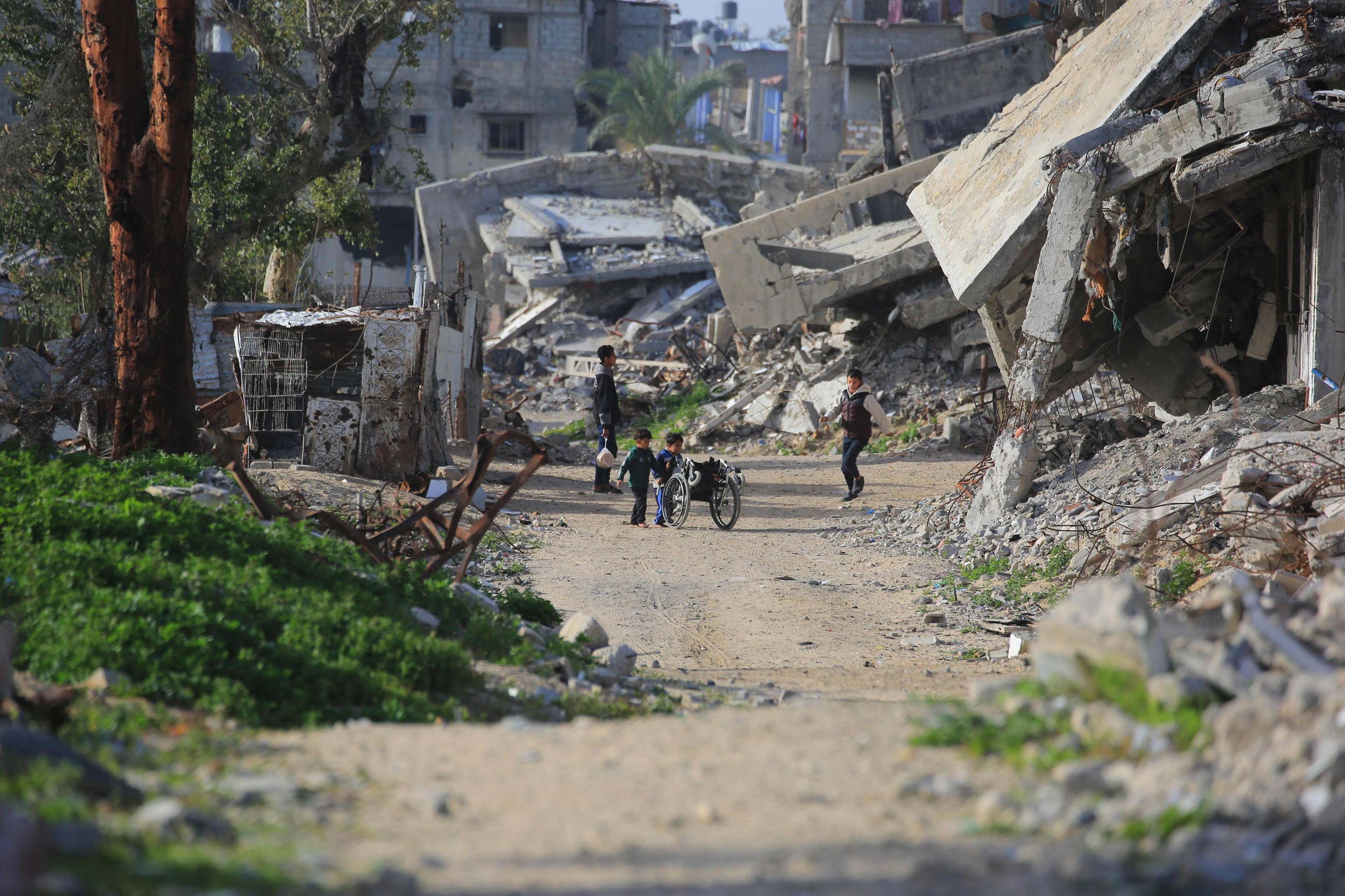
On the very onset of the Financial Year 2026-27, beginning from April 1, 2026, India faces a multi-layered set of risks, given its position as a major energy importer with strong trade, investment, and remittance linkages with the West Asia region, which has turned into a war zone since the United States of America and Israel launched it on February 2026. India’s budget for 2026-27, was tabled in the parliament much before on February 1, that has now been rendered irrelevant, and the evolving situation warrants calibrated policy responses, to save the people of India. According to an estimate the fall of the rupee to Rs93 per dollar in early March had already pushed 18.7 per cent of the country’s population into poverty compared to early 2022, while it continues to fall. On March 30, it is Rs 94.71 per dollar.
In the monthly Economic Review for March 2026, the Chief Economic Advisor of the Government of India V Anantha Nageswaran, has said that India’s merchandise trade deficit exceeded USD 280 billion in 2024-25, amounting to around7.5 per cent of GDP and the trade deficit would rise significantly in FY27, widening the current account deficit. Keeping it manageable will require burden-sharing between the government, via fiscal absorption, and households and businesses. Pass-through of higher import prices to end-users will also moderate demand growth and, with it, the pressure on the current account.
On the 27th February, we upgraded India’s growth estimate (at constant prices) for FY27 to a range of 7.0 per cent to 7.4 per cent, Nageswaran said. Clearly, there is considerable downside to this number. However, the data for March does not reveal much, since businesses are trying to meet full-year targets forFY26. Similarly, the current account deficit too will widen significantly in FY27.
At the same time, in the current and the preceding financial years, net capital flows to India have been sharply lower, although gross foreign direct investment flows have remained steady. He hoped that continued efforts to lower manufacturing costs — such as reducing tariffs on industrial power, allowing employers and employees to agree on averaging labour hours over a quarter or half-year and reducing overtime rates — will further enhance India’s already-strong attractiveness as an investment destination, given its market size. Further, in the current circumstances, credible assurances of tax policy certainty, stability and continuity will matter more than ever.
Given the considerable impact of the conflict on India’s economy, CEA, said that we should leverage the fallout to redouble our recent reform efforts to enhance India’s competitiveness and preparedness. The ‘entrepreneurial mindset’ in bureaucracy (not making the ‘best’ the enemy of the ‘good’), accompanied by enhanced speed of decision-making, is precisely what is called for if India is to emerge from this episode stronger, more resilient and more competitive.
The economic review for March 2026, has said that the economic outlook has become more uncertain, which have disrupted key energy and logistics channels and led to a tightening of global supply conditions. Prior to the onset of these developments, economic activity in India remained robust up to February 2026, with strong performance across both supply and demand-side indicators, on which data the review of the March 2026 has relied, and therefore the review itself admitted that it may not fully capture the evolving impact of the conflict. However, the recent data for March reflect that the recent shocks are being transmitted through higher input costs, supply constraints, and pressures across sectors.
On the inflation front, retain inflation rose to a 10-month high of 3.21 per cent in February2026, driven primarily by a sharp uptick in food prices. The current inflation numbers do not yet reflect the potential impact of rising crude oil prices, which pose an upside risk going forward, the review stated.
In recent times, a decline in predictability, with trade policy uncertainty emerging as the prevailing norm, has been observed. This shift can be attributed to various factors, including tariffs and other restrictions, as well as supply chain challenges stemming from geopolitical disruptions. In February 2026, India’s merchandise exports declined marginally by 0.8 percent (YoY).
India’s current account deficit widened to 1.3 per cent of GDP in Q3 of FY26, from 1.1 percent of GDP in Q3 FY25. The increase was mainly driven by a larger merchandise trade deficit. During April-JanuaryFY26, gross FDI inflows increased; however, this momentum did not translate into higher net FDI, which remained subdued and has been negative for five consecutive months. Increased geopolitical uncertainty has dampened global risk appetite; as a result, the portfolio flows remained negative in March 2026.
Global Geopolitical Risk Index had already reached new high by January 2026, and the West Asia conflict has worsened the situation. Average commodity prices have increased sharply. Data until March 2026 shows that the price of natural gas has increased from 32.4 Euro/MWh in February 2026 to 52.2 Euro/MWh and Brent Crude Spot increased from 69.8 USD/BBL to 94 USD/BBL during this period. As for fertilizer, price of Ammonia has increased from 493.1 USD/MT in February to 568.3 USD/MT as on March 20. On the same date the price of Urea was increased to 696.7 USD/MT as against 475.1 USD/MT in February 2026.
The outage of LNG from the Middle East is expected to last for several years due to damage of the industrial facilities there. Going forward, the review said that the fundamental problem is a simultaneous double squeeze – no crude coming in, and no product going out. So even where crude can come in via alternate pipelines, finished products cannot leave as they are more dependent on tankers, making partial operation economically pointless. Thus, production of crude and natural gas will have to be scaled downowing to overflowing bunkering facilities, which have not been cleared as the tankers are stranded.
Output product storage capacity generally does not exceed a month’s worth of requirements. Hence, if refineries are shut down, it will take a long time to resume normal oil production even after the conflict subsides. Overall, these cascading effects are expected to weigh on global economic activity and reinforce inflationary pressures, with risks to growth skewed to the downside.
LPG faces more acute constraints than LNG, and there will be time lag and elevated costs. LPG have limited substitutability since India imports 93 per cent from conflict affected region, and has low refinery yields of only around 4-6 per cent throughput. It impacts fertilisers (gas-based urea, petrochemicals, and gas-based power generation, due to shortage and price increase.
India’s agriculture will be impacted because over 80 per cent of ammonia and sulphur imports come from the Gulf, while around 40 per cent of DAP imports are sourced from Saudi Arabia. If the situation remains unresolved, risks persists for Rabi season, fertilizer availability will somehow be managed during Kharif crops, with risk of higher costs. Input cost increases and logistical constraints may affect farm operations of the country.
Our refineries may focus on increasing LPG output, but this reduces the output of other petrochemical products, creating disruption in feedstock availability. Shortage of solvents and polymers are disrupting production cycles of pharmaceuticals, chemicals, packaging, textiles, and plastics.
In several segments, particularly MSMEs and continuous-process industries like glass or ceramics, the inability to switch fuels or inputs has led to production curtailment and temporary shutdowns.
Shipping disruptions, rerouting, and war-risk premiums have significantly increased freight and insurance costs. Transit delays have lengthened delivery cycles, affecting both imports of critical inputs and export commitments. Airspace restrictions have further compounded challenges for high-value and time-sensitive cargo. Remittances will have significant impact. And on the fiscal side, higher subsidy requirements (fertiliser and fuel) and potential revenue shortfalls may widen the fiscal deficit, underscoring the need for expenditure prioritisation.
The transmission of higher global prices and logistics costs is already visible through exchange rate pressures, with the rupee depreciating to around ₹93.88 per US dollar (24 March2026), reflecting both trade-related pressures and heightened global risk aversion. In March alone, around USD 12.5 billion in outflows have occurred on the portfolio side.
E-way bill generation declined by 5.3 per cent on a month-on-month basis up to 22 March, indicating some moderation in goods movement, although it remained higher by 9.4 per cent on a year-on-year basis. Flash PMI estimates for March 2026 point to a softening in output growth following the energy price shock.
The review while saying that the range of measures taken by the government along with existing macroeconomic buffers, provide some support, it admitted that the balance of risks remains tilted to the downside. In this context, continued vigilance and proactive policy measures will be important to mitigate the impact of evolving global uncertainties. (IPA Service)
The article India Faces Multi-Layered Set Of Risks At The Onset Of FY2026-27 appeared first on Latest India news, analysis and reports on Newspack by India Press Agency).
The article India Faces Multi-Layered Set Of Risks At The Onset Of FY2026-27 appeared first on Arabian Post.
What's Your Reaction?