





























A Year After Deep Cuts, Can the Institute for Education Sciences Remake Itself?
The February release of a report on the future of the Institute of Education Sciences has offered Washington a plan for overhauling federal education research. Now the question is whether the Trump administration, which commissioned the document, intends to follow its suggestions. Just over a year ago, IES — the research arm of the U.S. […]

The February release of a report on the future of the Institute of Education Sciences has offered Washington a plan for overhauling federal education research. Now the question is whether the Trump administration, which commissioned the document, intends to follow its suggestions.
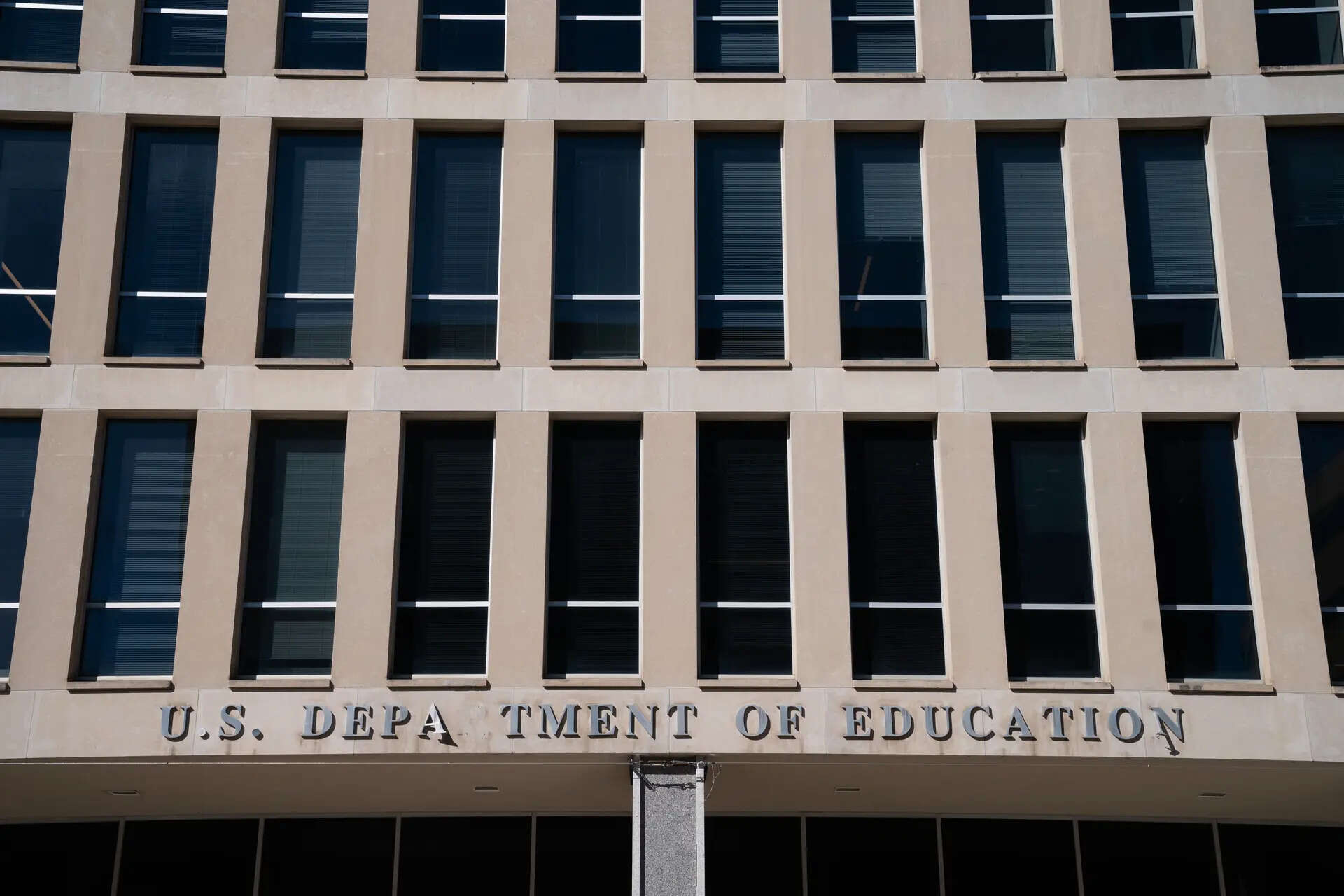
Just over a year ago, IES — the research arm of the U.S. Department of Education, charged with deepening America’s understanding of how schools perform and what students learn — was rocked by a wave of layoffs as Education Secretary Linda McMahon announced her intentions of shuttering her own agency. The education chapter of Project 2025, a policy wish-list assembled by the conservative Heritage Foundation, advised that the Institute’s statistical office be moved to the Census Bureau.
The picture looks somewhat sunnier as winter turns to spring, with Republicans in Congress sparing the IES budget from significant cuts and some rehiring taking place. In a recent interview, Lindsey Burke — the author of the Project 2025 recommendations on schooling, now serving as deputy chief of staff for policy and programs at the Education Department — referred to IES as the “gem in the crown” of the Education Department.
Most striking of all was the publication last month of a 93-page analysis by Amber Northern, a prominent education researcher and commentator appointed last year as a special advisor to McMahon. While critical of the Institute for its numerous areas of focus and the sometimes-plodding pace of its data releases, Northern’s overview represents a long-term vision for federal support of research that directly answers the needs of educators. McMahon and Acting IES Director Matthew Soldner praised the report, suggesting that its prescriptions would find a receptive audience in the administration.
But some insiders said that any attempt to improve the functions of the Institute would depend on a meaningful rebuilding of its capacity, including a move to restore agency staff to something approximating their numbers before last year’s DOGE cuts. What’s more, some tweaks to IES workings and grantmaking would require changes in law that would be impossible without bipartisan cooperation in Congress. That leaves open the question of whether there remains a constituency for the kind of large-scale, public-sector research endeavors that have long received the backing of both Democrats and Republicans.
Northern declined to comment for this story. But her recommendations — broadly, that IES limit its focus to a smaller number of national education challenges, reorient its work toward the practical concerns of schools, and foster cooperation among states to scale up their most promising policies — amplify some broadly shared views of where federal data collection needs to go.
Sara Schapiro, executive director of the advocacy coalition Alliance for Learning Innovation, noted that her group’s recent paper on the future of K–12 research and development made some of the same points, as did a 2022 missive from the National Academies of Sciences, Engineering, and Medicine. Not only are many of those ideas the subject of broad agreement, she added; they can also be implemented at the discretion of the Institute’s leadership, with no input from lawmakers necessary.
“One of the recommendations was a smaller set of research priorities — IES can just do that,” Schapiro said. “They can require better dissemination [of research] from grantees. They can do some of the rapid-cycle grants we’ve called for and this report calls for. And they can also review and change some of the NCES data collections.”
Yet any statutory changes would face major headwinds in an era of intense polarization and divided political attention. In 2023, Democrat Sen. Bernie Sanders and Republican Sen. Bill Cassidy sponsored a bill that would have reauthorized the Education Sciences Reform Act, the law that established IES in 2002. It never received a Senate vote, demonstrating to Schapiro that any legislative efforts would be “extraordinarily hard.”
“We weren’t able to get it over the finish line during the Biden administration, with an easier congressional landscape,” she acknowledged.
David Cleary, a former high-level Republican staffer who helped pass major education laws across more than two decades working in Congress, wrote in an email that the most promising potential revamp might lie in the pending appointment of Trump administration official Jim O’Neill to lead the National Science Foundation. An interagency agreement between NSF and IES could allow the two organizations to pool resources and expertise going forward. (Two such agreements have already been struck between the Department of Education and the Department of Health and Human Services.)
Beyond such administrative wrangling, however, Cleary said the education policy community needed to “buckle down and do hard things well instead of doing easy things poorly.” He cited the recent momentum of state-led literacy initiatives, galvanized partly through their partnership with federally funded research labs, as an example for lawmakers to follow.
“The challenge is getting staff and members to think a little more dispassionately about what needs to be researched and funded,” Cleary wrote. “Instead of letting every question be asked, every project funded, every idea pursued, we should model after the successful endeavors on the science of reading.”
Veteran research administrator Cara Jackson, who worked at a private research organization that collaborated with IES until losing her job last year, said she agreed with portions of Northern’s critique, noting the long wait times that contractors anticipated when receiving feedback from the Institute’s various offices and stakeholders. She argued that greater transparency in the research process, including a dashboard allowing the public to track the time and money expended on each project, would foster more “mutual accountability” on all sides.
Nevertheless, it was a “strange sequence” to call for reforms after largely dismantling the Institute’s workforce, Jackson continued. Well-intentioned proposals to award funding and release data on a faster timetable would likely falter if not enough employees existed to simply push money out the door to grantees and contractors.
“There were people there who were already acting on these ideas and could have been doing that all this time,” Jackson observed. “Now you’re going to have to hire people to do it. It takes forever to hire government employees, and we haven’t made the job any more attractive by letting go of all these people.”
What's Your Reaction?