

























Rethinking Laboratory Safety in a Changing Research Landscape
Laboratories, whether in universities, hospitals or industrial research centres, rarely command public attention. Yet the integrity of their work often depends as much on routine maintenance and appropriate equipment as on scientific expertise. In recent years, lab managers across the Middle East and beyond have been reassessing how safety infrastructure is selected, maintained and upgraded, particularly as research volumes increase and regulatory scrutiny tightens. At the […] The article Rethinking Laboratory Safety in a Changing Research Landscape appeared first on Arabian Post.

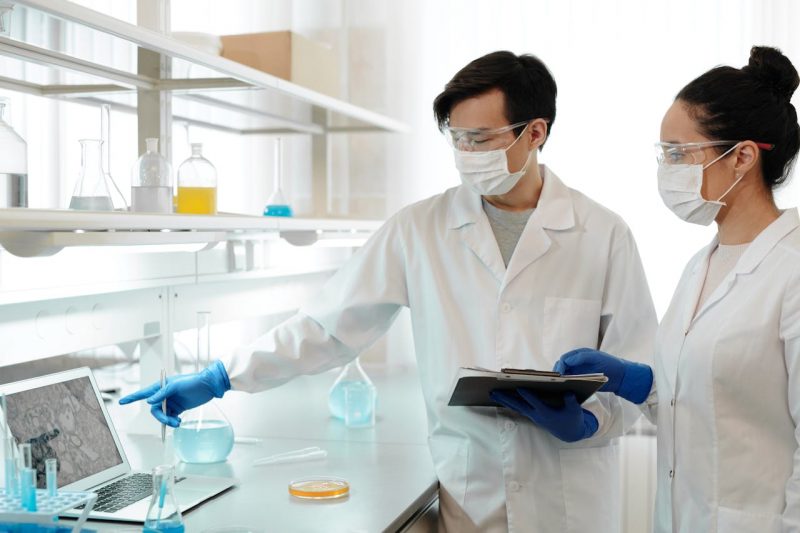
Laboratories, whether in universities, hospitals or industrial research centres, rarely command public attention. Yet the integrity of their work often depends as much on routine maintenance and appropriate equipment as on scientific expertise. In recent years, lab managers across the Middle East and beyond have been reassessing how safety infrastructure is selected, maintained and upgraded, particularly as research volumes increase and regulatory scrutiny tightens.
At the centre of that reassessment is air handling. Chemical vapours, biological agents and particulate matter remain persistent risks in enclosed research environments. Traditional ducted systems, long considered the default option for fume extraction, require complex building integration and ongoing energy consumption. In contrast, ductless laboratory fume hoods have emerged as a practical alternative for specific, low-risk applications.
A ductless hood operates as a self-contained ventilated enclosure. An internal fan draws contaminated air through a series of filters before recirculating purified air back into the laboratory. The filtration system is engineered to capture vapours generated during controlled chemical procedures. Because the unit does not require external ducting, installation is generally less disruptive and more flexible for laboratories operating in constrained urban facilities or retrofitted spaces.
Safety specialists caution, however, that ductless systems are not universal solutions. International laboratory safety guidelines emphasise that such hoods should only be deployed where chemical hazards are well characterised and relatively low, and where access to reagents is tightly managed. In high-toxicity or volatile environments, fully ducted extraction systems remain the preferred safeguard.
The distinction matters for procurement officers who must balance cost, compliance and long-term operational efficiency. In the Gulf region, where new academic institutions and biotech ventures are expanding, procurement decisions increasingly reflect lifecycle considerations rather than upfront installation expenses alone.
Manufacturers have responded by broadening their portfolios. Companies such as topairsystems.com, which supplies containment and air-filtration equipment to laboratories internationally, have seen growing demand for modular systems that can be adapted to evolving research needs. Among its offerings is the Ductless Fume Hood for lab, positioned for controlled environments where flexibility and mobility are priorities.
Industry analysts note that interest in ductless systems also reflects sustainability concerns. Conventional ducted hoods can expel conditioned air from climate-controlled laboratories, placing additional load on heating and cooling systems. By recirculating filtered air internally, ductless units may reduce overall energy consumption when deployed appropriately. However, experts stress that filter monitoring and timely replacement are critical to ensuring performance does not degrade over time.
Beyond chemical handling, biological research environments face parallel safety demands. The handling of pathogens, cell cultures and genetically modified materials requires containment strategies designed not only to protect laboratory personnel but also to prevent environmental release. In these settings, the biological safety cabinet has become indispensable.
Unlike standard fume hoods, biological safety cabinets are engineered to provide both product and personnel protection. Airflow patterns and high-efficiency particulate air (HEPA) filtration create controlled zones that limit cross-contamination. Suppliers across the sector, among them firms such as TopAir Systems, provide systems such as the biological safety cabinet, which are used in clinical diagnostics, pharmaceutical research and academic laboratories.
Laboratory accreditation bodies typically require documented maintenance schedules for such cabinets, including periodic airflow testing and certification. Failure to maintain proper containment not only jeopardises worker safety but can invalidate research results. As one laboratory safety consultant in Dubai observed recently, “The equipment is only as reliable as the maintenance protocol behind it.”
The broader conversation around laboratory equipment increasingly extends to risk assessment culture. Institutions are being urged to match equipment choice with clearly defined hazard profiles. For instance, a teaching laboratory handling small volumes of low-volatility chemicals may find ductless hoods appropriate, provided chemical inventories are controlled and filter suitability is verified. Conversely, research involving highly toxic or unknown compounds would demand more robust extraction infrastructure.
Procurement transparency has also become more prominent. Universities and public research institutions are expected to demonstrate that equipment selection aligns with international standards. Suppliers, for their part, are under pressure to provide clear technical documentation, including filtration efficiency data and recommended operating conditions.
Maintenance teams, often overlooked in research narratives, play a decisive role. Regular inspection of seals, fans and filter systems can extend equipment lifespan and prevent costly downtime. In regions where environmental conditions include high ambient dust or humidity, maintenance intervals may need adjustment to preserve performance.
As laboratories continue to evolve — driven by advances in biotechnology, pharmaceuticals and materials science — the fundamentals remain constant. Clean air management, appropriate containment and disciplined maintenance form the backbone of safe scientific practice. The growing availability of specialised equipment, from ductless fume hoods to advanced biological safety cabinets, offers laboratories more options than ever. Yet those options demand careful evaluation.
In an era when research output is accelerating and regulatory expectations are rising, laboratory safety is no longer a background consideration. It is a strategic priority, one that links infrastructure decisions to scientific credibility.
The article Rethinking Laboratory Safety in a Changing Research Landscape appeared first on Arabian Post.
What's Your Reaction?