






















Refrigerants Review 2026 Highlights Refrigerants as a Growing ESG Risk for the Built Environment

Refrigerants Review 2026 highlights how cooling systems and high-GWP refrigerants are becoming a major ESG risk for buildings, with rising regulation and asset impact.

Refrigerants Review 2026 Highlights Refrigerants as a Growing ESG Risk for the Built Environment

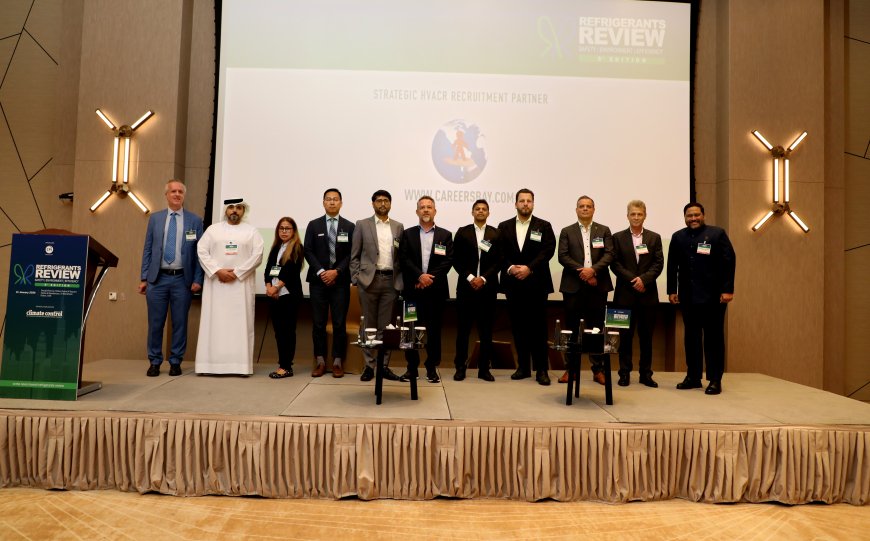
At the 5th Edition of Refrigerants Review 2026, industry leaders warned that refrigerants — long treated as a technical detail — are emerging as one of the most significant ESG risks facing the built environment.

The conference brought together regulators, developers, engineers, and sustainability professionals to examine the growing climate, regulatory, and asset risks associated with cooling and refrigeration systems across commercial and residential buildings.

The Hidden Carbon Cost of Cooling

Speakers highlighted that commonly used refrigerants carry an extremely high global warming potential (GWP). In many cases, a single kilogram of refrigerant can have the same warming impact as 2–4 tonnes of CO₂. Over a system’s lifetime, refrigerant leakage can rival — or even exceed — the emissions reductions achieved through energy-efficiency measures.

Globally, refrigerant-related emissions are now estimated to be comparable to emissions from the aviation sector, underscoring the scale of the issue for the built environment.

For asset owners and developers, this presents direct exposure in the form of:

  • Increasing regulatory compliance requirements

  • Rising retrofit and replacement costs

  • Asset obsolescence and stranded asset risk

  • Reputational and ESG performance impacts

Regulation Is Accelerating

Discussions at Refrigerants Review 2026 underscored that regulatory frameworks are evolving rapidly. Key developments highlighted included:

  • Article 5 timelines under the Kigali Amendment, which will progressively restrict the availability of high-GWP refrigerants

  • UAE Climate Law No. 11, introducing new compliance expectations for buildings and infrastructure

  • International precedents such as the EU F-Gas Regulation and US EPA rules, signaling tighter global controls

Participants agreed that delaying action is likely to increase long-term costs and operational disruption.

Refrigerants: The Missing Piece in ESG Strategies

While energy efficiency has been a primary focus of decarbonisation efforts, speakers noted that refrigerants drive direct emissions, which are often underreported or excluded from ESG disclosures.

As a result, a building can perform well on energy metrics yet remain climate-intensive if it relies on high-GWP refrigerants with inadequate leak management and maintenance practices.

Practical Actions for Developers and Asset Owners

The conference outlined five immediate priorities for organisations managing building portfolios:

  1. Audit refrigerant inventories to understand installed gases, their GWP, and leakage risk

  2. Prioritise natural refrigerants in new developments, particularly in district cooling, cold storage, and large mixed-use assets

  3. Plan phased retrofits, rather than reactive replacements, to avoid stranded assets

  4. Invest in training and operational excellence, as poor installation and maintenance can negate technology gains

  5. Integrate refrigerants into ESG and carbon reporting, reflecting growing investor expectations

A Wake-Up Call for the Built Environment

While aviation emissions attract significant public attention due to their visibility, conference participants noted that refrigerant emissions deserve equal scrutiny because they are largely avoidable with existing technology and better management.

For the built environment, refrigerants represent one of the fastest and most cost-effective decarbonisation opportunities available today.

Looking Ahead

The transition away from high-GWP refrigerants is no longer solely a compliance exercise. Industry leaders emphasised that early action can help future-proof assets, protect long-term value, and demonstrate credible climate leadership.

As discussions at Refrigerants Review 2026 made clear, those who act early will be better positioned to lead, while those who delay may face higher costs and tighter timelines.

About Refrigerants Review 2026
Refrigerants Review 2026 is a leading industry forum bringing together policymakers, developers, engineers, and sustainability leaders to address regulatory developments, technology innovation, and ESG challenges related to cooling and refrigeration in the built environment.

Media Contact:

Press Release Author- Dr. Samiullah Khan.

This Press release is for informational purpose only. All infomation is subject to change without notice. The publisher and authors assume no responsibility for errors or for any actions taken based on this content.

What's Your Reaction?

like

dislike

love

funny

angry

sad

wow

DDP Editor Admin managing news updates, RSS feed curation, and PR content publishing. Focused on timely, accurate, and impactful information delivery.