

























New CBSE grading system: What UAE students and parents need to know
Across the UAE, teachers are stepping in to reassure students that their results, and academic futures remain secure, even as escalating regional tensions have led to the cancellation of the remaining Central Board of Secondary Education (CBSE) Class 10 and 12 board exams across the Middle East, upending plans for many.The decision, triggered by the ongoing US-Israel-Iran conflict, prioritised student safety while also raising questions among families about grading, results, and next steps.Students in the country, who had prepared for months are now adjusting to a revised evaluation system, with clarity on marking criteria becoming key to easing concerns.Stay up to date with the latest news. Follow KT on WhatsApp channels.In response, CBSE has introduced a special assessment scheme for the region, designed to ensure fairness and continuity while reinforcing confidence that no student will be disadvantaged.A hybrid model to ensure fairnessTo address the disruption, CBSE has introduced a hybrid evaluation system that combines marks from completed exams with calculated averages for papers that could not be conducted.The goal is to ensure that students are assessed based on demonstrated performance rather than missed opportunities.Explaining the approach, Fatima Martin, Principal and CEO of GEMS New Millennium School, said the scheme is designed to be both fair and globally aligned. She noted that the model “ensures that students are evaluated fairly without being disadvantaged by circumstances beyond their control,” adding that it “shifts the emphasis from a purely examination-driven system to a balanced, evidence-based evaluation".Under the framework, students who completed all their exams will be assessed based on actual performance. For those who missed papers, CBSE will calculate marks using averages derived from their best-performing subjects. For instance, students who appeared for four exams will have the average of their best three subjects applied to the missed paper, while those who appeared for fewer exams will have averages calculated accordingly.Martin highlighted that this “transparent, graded approach ensures that every student is assessed proportionately", reinforcing confidence that results will remain comparable with the global CBSE cohort.Dr Prema Muralidhar, Principal of The Royal Academy Ajman, reiterated this, explaining that CBSE has implemented “a structured, evidence-based evaluation matrix” where completed exam performance forms the basis for deriving marks in missed subjects. She added that statistical moderation and averaging protocols are being used to ensure “standardisation, reliability, and parity with the global cohort".Improvement examinations and future opportunitiesOne of the biggest concerns for UAE families has been whether this disruption will delay results or affect higher education plans. CBSE has confirmed that results will be declared on time, in line with the global schedule — an assurance that has helped ease anxiety across the community.Dr Muralidhar said this alignment is “reassuring", as it enables “seamless academic progression and informed decision-making for higher education pathways for students applying to universities in India and abroad, maintaining timelines is critical".Beyond results, CBSE is also continuing its policy of offering improvement examinations, giving students a second chance to enhance their scores. These exams, typically held between May and June, are aligned with broader education reforms and offer flexibility to those who feel they could perform better under normal circumstances.Bhanu Sharma, Principal of Woodlem Park Ajman, acknowledged the emotional toll the situation has taken on families. He said, “This situation has understandably caused anxiety among students and parents,” but emphasised that CBSE has acted “with sensitivity and flexibility” to ensure academic progression is not affected.She added that schools across the UAE are stepping in to support students through guidance and counselling, helping them navigate both academic and emotional challenges during this period.“We are seeing moderate interest in improvement examinations, particularly from students who feel they could perform better under normal circumstances. CBSE traditionally conducts improvement or second-phase examinations between May and June, and students will have the opportunity to appear and retain the better score.”“Overall, the focus remains on reassurance — students should stay confident that their efforts will be fairly recognised despite these unprecedented times,” she added. How will students in UAE be assessed as Grade 10 CBSE exams stand cancelled?CBSE class 12 exam cancelled: Will grading affect university placements?CBSE announces assessment scheme for Class 10 students in UAE, Middle East
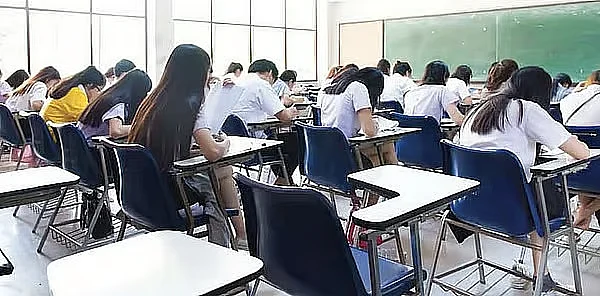
Across the UAE, teachers are stepping in to reassure students that their results, and academic futures remain secure, even as escalating regional tensions have led to the cancellation of the remaining Central Board of Secondary Education (CBSE) Class 10 and 12 board exams across the Middle East, upending plans for many.
The decision, triggered by the ongoing US-Israel-Iran conflict, prioritised student safety while also raising questions among families about grading, results, and next steps.
Students in the country, who had prepared for months are now adjusting to a revised evaluation system, with clarity on marking criteria becoming key to easing concerns.
Stay up to date with the latest news. Follow KT on WhatsApp channels.
In response, CBSE has introduced a special assessment scheme for the region, designed to ensure fairness and continuity while reinforcing confidence that no student will be disadvantaged.
A hybrid model to ensure fairness
To address the disruption, CBSE has introduced a hybrid evaluation system that combines marks from completed exams with calculated averages for papers that could not be conducted.
The goal is to ensure that students are assessed based on demonstrated performance rather than missed opportunities.
Explaining the approach, Fatima Martin, Principal and CEO of GEMS New Millennium School, said the scheme is designed to be both fair and globally aligned. She noted that the model “ensures that students are evaluated fairly without being disadvantaged by circumstances beyond their control,” adding that it “shifts the emphasis from a purely examination-driven system to a balanced, evidence-based evaluation".
Under the framework, students who completed all their exams will be assessed based on actual performance. For those who missed papers, CBSE will calculate marks using averages derived from their best-performing subjects.
For instance, students who appeared for four exams will have the average of their best three subjects applied to the missed paper, while those who appeared for fewer exams will have averages calculated accordingly.
Martin highlighted that this “transparent, graded approach ensures that every student is assessed proportionately", reinforcing confidence that results will remain comparable with the global CBSE cohort.
Dr Prema Muralidhar, Principal of The Royal Academy Ajman, reiterated this, explaining that CBSE has implemented “a structured, evidence-based evaluation matrix” where completed exam performance forms the basis for deriving marks in missed subjects. She added that statistical moderation and averaging protocols are being used to ensure “standardisation, reliability, and parity with the global cohort".
Improvement examinations and future opportunities
One of the biggest concerns for UAE families has been whether this disruption will delay results or affect higher education plans. CBSE has confirmed that results will be declared on time, in line with the global schedule — an assurance that has helped ease anxiety across the community.
Dr Muralidhar said this alignment is “reassuring", as it enables “seamless academic progression and informed decision-making for higher education pathways for students applying to universities in India and abroad, maintaining timelines is critical".
Beyond results, CBSE is also continuing its policy of offering improvement examinations, giving students a second chance to enhance their scores. These exams, typically held between May and June, are aligned with broader education reforms and offer flexibility to those who feel they could perform better under normal circumstances.
Bhanu Sharma, Principal of Woodlem Park Ajman, acknowledged the emotional toll the situation has taken on families. He said, “This situation has understandably caused anxiety among students and parents,” but emphasised that CBSE has acted “with sensitivity and flexibility” to ensure academic progression is not affected.
She added that schools across the UAE are stepping in to support students through guidance and counselling, helping them navigate both academic and emotional challenges during this period.
“We are seeing moderate interest in improvement examinations, particularly from students who feel they could perform better under normal circumstances. CBSE traditionally conducts improvement or second-phase examinations between May and June, and students will have the opportunity to appear and retain the better score.”
“Overall, the focus remains on reassurance — students should stay confident that their efforts will be fairly recognised despite these unprecedented times,” she added.
What's Your Reaction?