













India and Malaysia slam terrorism, renew pledges to boost trade on Modi visit
Prime Minister Narendra Modi and his Malaysian counterpart, Anwar Ibrahim, condemned terrorism in all its forms and manifestations, including cross-border terrorism.The two leaders called for zero-tolerance of terrorism and concerted international efforts to combat it in a comprehensive and sustained manner.The two leaders agreed to counter radicalisation and violent extremism, combat financing of terrorism and prevent the use of new and emerging technologies for terrorist purposes, through cooperation in information and knowledge sharing, exchange of best practices and capacity building, according to the joint statement released following the meeting between PM Modi and PM Ibrahim.The joint statement stated, "Recognising the linkages between terrorism and transnational organised crime, the two leaders agreed to cooperate in the area of transnational organised crime, including through sharing of information and best practices. The two leaders reaffirmed commitment to strengthen bilateral and multilateral cooperation in countering terrorism, including in the UN and FATF."Modi and Anwar expressed satisfaction with the robust defence partnership between the two nations through regular exchanges, visits, staff talks, exercises, training courses and defence industry collaboration.The two leaders welcomed the outcomes of the Malaysia-India Defence Cooperation Committee (MIDCOM) and its subcommittees, including the Terms of Reference on the establishment of a Strategic Affairs Working Group (SAWG) and Su-30 Forum.From CEPA to bilateral payment linkagesModi and Anwar on Sunday oversaw the signing of six major agreements between India and Malaysia, as both nations moved to further strengthen cultural, economic and strategic cooperation during bilateral engagements in Kuala Lumpur.The agreements were finalised following comprehensive discussions between the two leaders during PM Modi's two-day official visit to Malaysia.The visit marked a significant milestone in advancing the Comprehensive Strategic Partnership between the two countries, according to the Ministry of External Affairs (MEA).During their talks, both leaders explored avenues to enhance collaboration across a broad spectrum of sectors, including trade, investment, semiconductors, defence, security, maritime cooperation, energy, renewable resources, tourism, cultural exchanges, as well as digital and emerging technologies.Both leaders shared the intent to expand cooperation across both traditional and new-age sectors of mutual interest.Several important bilateral agreements and memoranda were exchanged during the visit, covering areas such as security cooperation, participation in United Nations peacekeeping initiatives, semiconductor development, healthcare and medicine, disaster management, anti-corruption efforts, audio-visual co-production, vocational education, and social security arrangements for Indian workers in Malaysia.During the visit, Prime Minister Modi also announced the establishment of a dedicated Thiruvalluvar Centre at Universiti Malaya, along with the introduction of Thiruvalluvar scholarships.The initiative is aimed at promoting the teachings and philosophy of the ancient Tamil poet and philosopher Thiruvalluvar, while also strengthening cultural exchanges and people-to-people ties between India and Malaysia, the MEA said.The Prime Minister further announced India's decision to open its first Consulate in Malaysia, a move expected to enhance diplomatic engagement, strengthen bilateral relations and provide improved support to Indian citizens residing in or visiting the country.Among the agreements signed, cooperation between the University of Cyberjaya and ITRA Jamnagar was highlighted as a key development.According to the MEA, this partnership will focus on traditional medicine and is expected to facilitate research and academic exchange in Ayurveda, along with expanding access to holistic healthcare practices and knowledge sharing between the two countries.As part of efforts to improve overall connectivity and economic integration, National Payments Corporation of India's subsidiary, NIPL, and Malaysia's PayNet have agreed to collaborate on establishing bilateral payment linkages, including integration through the Unified Payments Interface (UPI).The initiative is expected to improve ease of doing business and provide seamless, low-cost remittance and payment solutions for tourists, students and business communities operating between the two nations.In another significant development, Malaysia has completed all necessary formalities for joining the International Big Cat Alliance, an initiative aimed at global conservation of big cat species and biodiversity protection.Additionally, the report of the 10th India-Malaysia CEO Forum was presented to the two leaders during the visit.The forum's report is expected to provide recommendations and insights to strengthen business-to-business collaboration and expand trade and investment opport
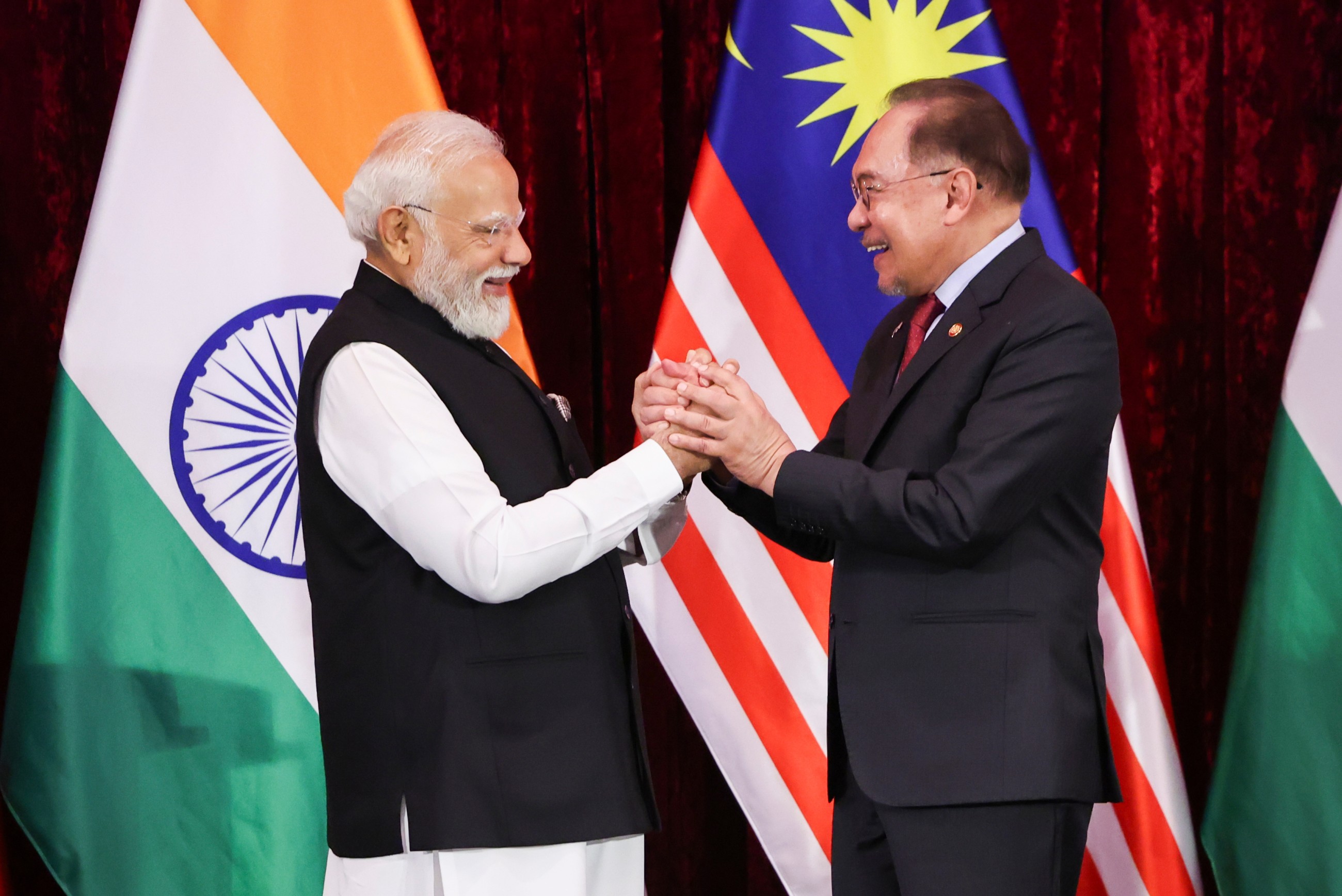
Prime Minister Narendra Modi and his Malaysian counterpart, Anwar Ibrahim, condemned terrorism in all its forms and manifestations, including cross-border terrorism.The two leaders called for zero-tolerance of terrorism and concerted international efforts to combat it in a comprehensive and sustained manner.The two leaders agreed to counter radicalisation and violent extremism, combat financing of terrorism and prevent the use of new and emerging technologies for terrorist purposes, through cooperation in information and knowledge sharing, exchange of best practices and capacity building, according to the joint statement released following the meeting between PM Modi and PM Ibrahim.The joint statement stated, "Recognising the linkages between terrorism and transnational organised crime, the two leaders agreed to cooperate in the area of transnational organised crime, including through sharing of information and best practices. The two leaders reaffirmed commitment to strengthen bilateral and multilateral cooperation in countering terrorism, including in the UN and FATF."Modi and Anwar expressed satisfaction with the robust defence partnership between the two nations through regular exchanges, visits, staff talks, exercises, training courses and defence industry collaboration.The two leaders welcomed the outcomes of the Malaysia-India Defence Cooperation Committee (MIDCOM) and its subcommittees, including the Terms of Reference on the establishment of a Strategic Affairs Working Group (SAWG) and Su-30 Forum.From CEPA to bilateral payment linkagesModi and Anwar on Sunday oversaw the signing of six major agreements between India and Malaysia, as both nations moved to further strengthen cultural, economic and strategic cooperation during bilateral engagements in Kuala Lumpur.The agreements were finalised following comprehensive discussions between the two leaders during PM Modi's two-day official visit to Malaysia.The visit marked a significant milestone in advancing the Comprehensive Strategic Partnership between the two countries, according to the Ministry of External Affairs (MEA).During their talks, both leaders explored avenues to enhance collaboration across a broad spectrum of sectors, including trade, investment, semiconductors, defence, security, maritime cooperation, energy, renewable resources, tourism, cultural exchanges, as well as digital and emerging technologies.Both leaders shared the intent to expand cooperation across both traditional and new-age sectors of mutual interest.Several important bilateral agreements and memoranda were exchanged during the visit, covering areas such as security cooperation, participation in United Nations peacekeeping initiatives, semiconductor development, healthcare and medicine, disaster management, anti-corruption efforts, audio-visual co-production, vocational education, and social security arrangements for Indian workers in Malaysia.During the visit, Prime Minister Modi also announced the establishment of a dedicated Thiruvalluvar Centre at Universiti Malaya, along with the introduction of Thiruvalluvar scholarships.The initiative is aimed at promoting the teachings and philosophy of the ancient Tamil poet and philosopher Thiruvalluvar, while also strengthening cultural exchanges and people-to-people ties between India and Malaysia, the MEA said.The Prime Minister further announced India's decision to open its first Consulate in Malaysia, a move expected to enhance diplomatic engagement, strengthen bilateral relations and provide improved support to Indian citizens residing in or visiting the country.Among the agreements signed, cooperation between the University of Cyberjaya and ITRA Jamnagar was highlighted as a key development.According to the MEA, this partnership will focus on traditional medicine and is expected to facilitate research and academic exchange in Ayurveda, along with expanding access to holistic healthcare practices and knowledge sharing between the two countries.As part of efforts to improve overall connectivity and economic integration, National Payments Corporation of India's subsidiary, NIPL, and Malaysia's PayNet have agreed to collaborate on establishing bilateral payment linkages, including integration through the Unified Payments Interface (UPI).The initiative is expected to improve ease of doing business and provide seamless, low-cost remittance and payment solutions for tourists, students and business communities operating between the two nations.In another significant development, Malaysia has completed all necessary formalities for joining the International Big Cat Alliance, an initiative aimed at global conservation of big cat species and biodiversity protection.Additionally, the report of the 10th India-Malaysia CEO Forum was presented to the two leaders during the visit.The forum's report is expected to provide recommendations and insights to strengthen business-to-business collaboration and expand trade and investment opportunities between India and Malaysia, further deepening economic engagement between the two countries.Indo-Asian News Service
What's Your Reaction?








DDP Editor
Admin managing news updates, RSS feed curation, and PR content publishing. Focused on timely, accurate, and impactful information delivery.