





























Dubai’s driverless taxi to hit roads soon: Khaleej Times enjoys exclusive first ride
Dubai residents may soon be able to travel in taxis without a driver behind the wheel. Khaleej Times experienced an exclusive ride inside one of the city’s upcoming driverless taxis, offering a first look at how autonomous travel could soon become part of daily life.The 15-minute test ride began near Jumeirah Mosque, where the vehicle arrived automatically at the pickup point. Unlike a regular taxi, there was no driver inside the car. Passengers entered the vehicle using a one-time password (OTP), after which the doors unlocked automatically.Once inside, clear instructions appeared on a touchscreen, guiding passengers through the process before the journey could begin. Riders were required to fasten their seat belts first. After closing the doors, the trip started with a simple swipe on the screen.Stay up to date with the latest news. Follow KT on WhatsApp Channels.All controls inside the vehicle are managed digitally. The taxi is equipped with two screens, one for the front passenger and another placed on the rear armrest, allowing riders to control air conditioning, check the route map, and manage other cabin functions throughout the journey. The ride can also be ended directly through the screen.The vehicle offers spacious seating for three passengers along with luggage space. Heated seats are available, while the right rear passenger seat also includes a massage function, adding to passenger comfort.As the journey began, the absence of a driver was immediately noticeable. The steering wheel moved on its own as the taxi navigated city roads, followed traffic rules, maintained lane discipline and adjusted speed smoothly according to surrounding vehicles.The ride felt calm and controlled, with acceleration and gentle braking at signals and turns. Movements were steady, often smoother than those experienced in taxis driven manually.The driverless taxi also drew significant attention from people on the road. Several pedestrians and motorists were seen slowing down or taking photos as the vehicle passed by without anyone seated behind the wheel. Dubai has been actively testing autonomous mobility solutions as part of its broader smart transport strategy aimed at introducing self-driving vehicles across the emirate in the coming years. Officials have said such technologies are expected to improve road safety, reduce human error, and enhance transport efficiency.RTA has also begun commercial operations of autonomous taxis in Umm Suqeim and Jumeirah, with services available to the public through the Uber and Apollo Go apps. The rollout is being carried out in partnership with Apollo Go and WeRide, another operator with an initial fleet of around 100 driverless taxis planned in the first phase.The autonomous taxis operate using artificial intelligence, high-definition maps and advanced sensors that allow the vehicles to respond to traffic signals, pedestrians and other vehicles in real time. Authorities said the system has undergone extensive testing on Dubai roads to ensure safety and smooth operation in live traffic conditions.Apollo Go, the autonomous ride-hailing service developed by Chinese technology company Baidu, operates driverless taxi services across 26 cities worldwide, including Dubai, Abu Dhabi, Hong Kong and London. Globally, the company has provided more than 20 million rides to the public, with millions of fully driverless trips completed in recent years. Its autonomous fleets have collectively logged hundreds of millions of kilometres on roads.Dubai is also home to Apollo Go’s first overseas operations and management hub, known as the Apollo Go Park; the 2,000-square-metre facility serves as a centre for operating and managing autonomous vehicles. Authorities plan to gradually expand the fleet to more than 1,000 fully driverless taxis across the emirate in the coming years.The rollout of the service follows a series of milestones in the UAE. Apollo Go signed strategic cooperation agreements with Dubai’s Roads and Transport Authority (RTA) in 2025 to launch autonomous mobility services before receiving permits to conduct open-road testing in designated areas. In January 2026, the company received Dubai’s first permit allowing fully driverless testing without a safety driver. Earlier this year, Sheikh Hamdan bin Mohammed bin Rashid Al Maktoum, Crown Prince of Dubai, also experienced a ride in the autonomous vehicle during the official launch of the fully driverless service.The robotaxi used for the test ride is the RT6, Apollo Go’s sixth-generation fully autonomous vehicle. The all-electric model has been purpose-built for driverless operations and is equipped with advanced sensing technology that allows the vehicle to detect surroundings in all directions and respond safely to road conditions. The system combines cameras, radars and lidar sensors to monitor traffic movement and obstacles in real time.Apollo Go has also entered a multi-year partnership with ride-hailing platform Uber, under which
Dubai residents may soon be able to travel in taxis without a driver behind the wheel. Khaleej Times experienced an exclusive ride inside one of the city’s upcoming driverless taxis, offering a first look at how autonomous travel could soon become part of daily life.
The 15-minute test ride began near Jumeirah Mosque, where the vehicle arrived automatically at the pickup point. Unlike a regular taxi, there was no driver inside the car. Passengers entered the vehicle using a one-time password (OTP), after which the doors unlocked automatically.
Once inside, clear instructions appeared on a touchscreen, guiding passengers through the process before the journey could begin. Riders were required to fasten their seat belts first. After closing the doors, the trip started with a simple swipe on the screen.
Stay up to date with the latest news. Follow KT on WhatsApp Channels.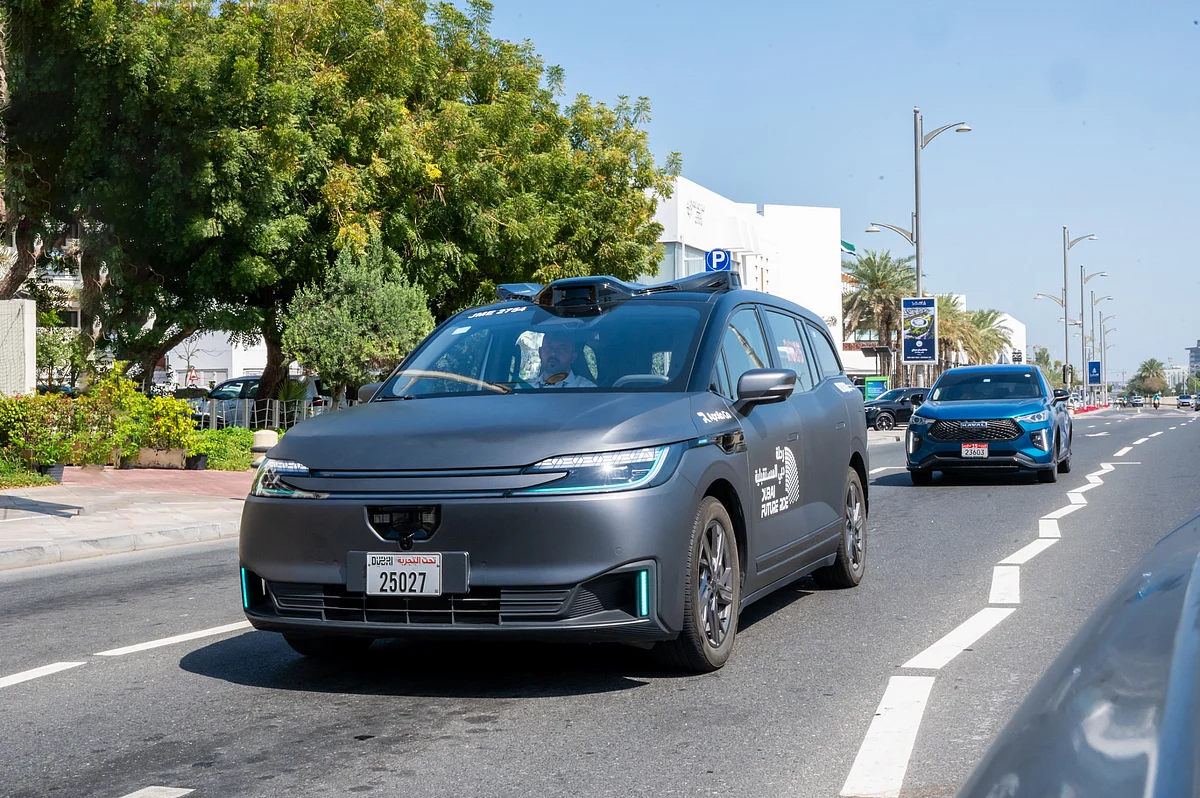
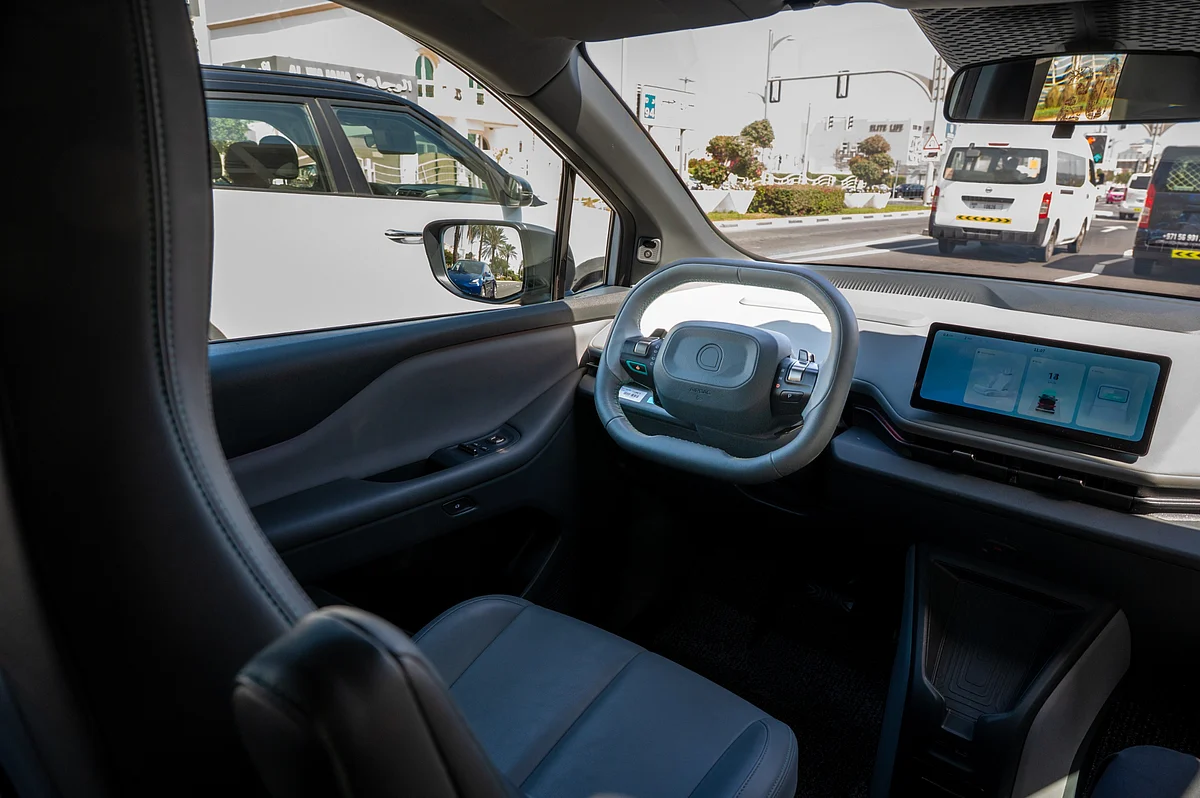
All controls inside the vehicle are managed digitally. The taxi is equipped with two screens, one for the front passenger and another placed on the rear armrest, allowing riders to control air conditioning, check the route map, and manage other cabin functions throughout the journey. The ride can also be ended directly through the screen.
The vehicle offers spacious seating for three passengers along with luggage space. Heated seats are available, while the right rear passenger seat also includes a massage function, adding to passenger comfort.
As the journey began, the absence of a driver was immediately noticeable. The steering wheel moved on its own as the taxi navigated city roads, followed traffic rules, maintained lane discipline and adjusted speed smoothly according to surrounding vehicles.
The ride felt calm and controlled, with acceleration and gentle braking at signals and turns. Movements were steady, often smoother than those experienced in taxis driven manually.
The driverless taxi also drew significant attention from people on the road. Several pedestrians and motorists were seen slowing down or taking photos as the vehicle passed by without anyone seated behind the wheel.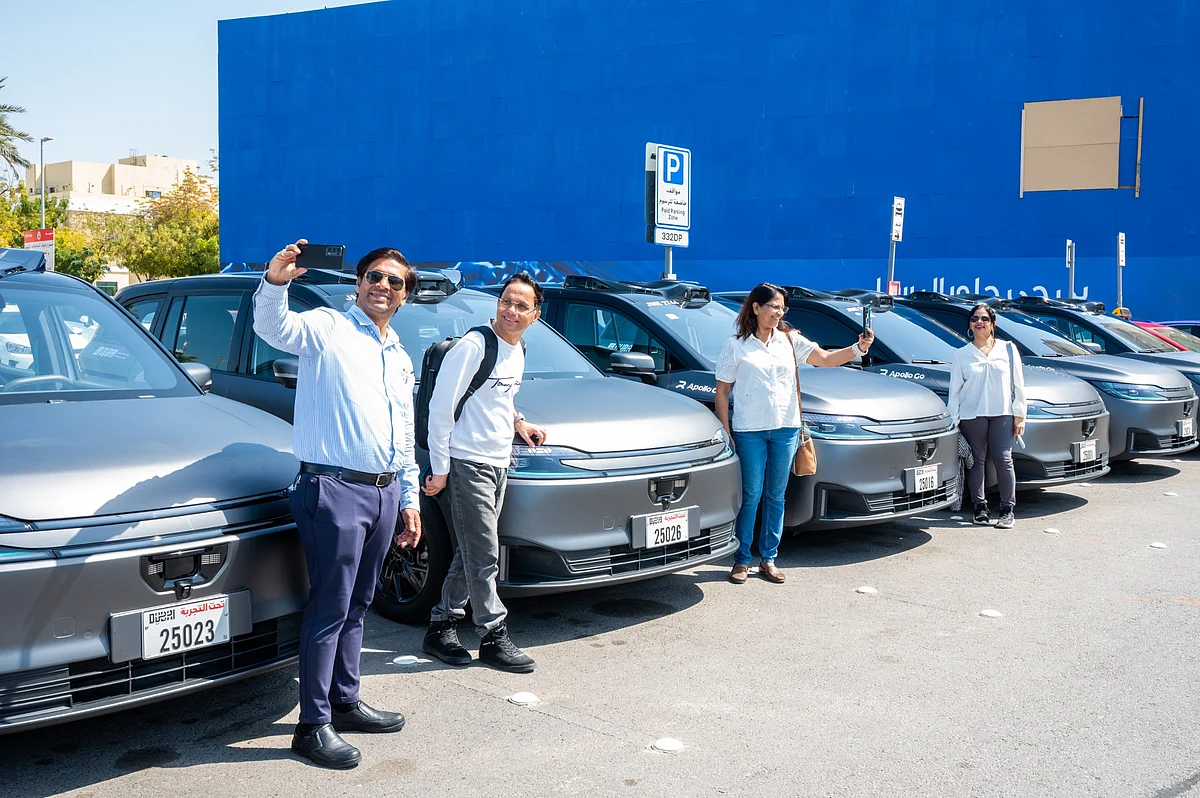
Dubai has been actively testing autonomous mobility solutions as part of its broader smart transport strategy aimed at introducing self-driving vehicles across the emirate in the coming years. Officials have said such technologies are expected to improve road safety, reduce human error, and enhance transport efficiency.
RTA has also begun commercial operations of autonomous taxis in Umm Suqeim and Jumeirah, with services available to the public through the Uber and Apollo Go apps. The rollout is being carried out in partnership with Apollo Go and WeRide, another operator with an initial fleet of around 100 driverless taxis planned in the first phase.
The autonomous taxis operate using artificial intelligence, high-definition maps and advanced sensors that allow the vehicles to respond to traffic signals, pedestrians and other vehicles in real time. Authorities said the system has undergone extensive testing on Dubai roads to ensure safety and smooth operation in live traffic conditions.
Apollo Go, the autonomous ride-hailing service developed by Chinese technology company Baidu, operates driverless taxi services across 26 cities worldwide, including Dubai, Abu Dhabi, Hong Kong and London. Globally, the company has provided more than 20 million rides to the public, with millions of fully driverless trips completed in recent years. Its autonomous fleets have collectively logged hundreds of millions of kilometres on roads.
Dubai is also home to Apollo Go’s first overseas operations and management hub, known as the Apollo Go Park; the 2,000-square-metre facility serves as a centre for operating and managing autonomous vehicles. Authorities plan to gradually expand the fleet to more than 1,000 fully driverless taxis across the emirate in the coming years.
The rollout of the service follows a series of milestones in the UAE. Apollo Go signed strategic cooperation agreements with Dubai’s Roads and Transport Authority (RTA) in 2025 to launch autonomous mobility services before receiving permits to conduct open-road testing in designated areas. In January 2026, the company received Dubai’s first permit allowing fully driverless testing without a safety driver.
Earlier this year, Sheikh Hamdan bin Mohammed bin Rashid Al Maktoum, Crown Prince of Dubai, also experienced a ride in the autonomous vehicle during the official launch of the fully driverless service.
The robotaxi used for the test ride is the RT6, Apollo Go’s sixth-generation fully autonomous vehicle. The all-electric model has been purpose-built for driverless operations and is equipped with advanced sensing technology that allows the vehicle to detect surroundings in all directions and respond safely to road conditions. The system combines cameras, radars and lidar sensors to monitor traffic movement and obstacles in real time.
Apollo Go has also entered a multi-year partnership with ride-hailing platform Uber, under which autonomous taxis are expected to be made available through the Uber app in Dubai. The service is expected to roll out across select locations in the Jumeirah area in the coming months.
While the service is still undergoing trials, the experience offered a glimpse into a future where passengers may simply book a ride, enter a vehicle, and reach their destination without a driver.
What's Your Reaction?