

















India–Pakistan feud casts shadow over cricket's Olympic ambitions
While scores of cricket commentators and journalists have praised the International Cricket Council (ICC) for its role in breaking the India–Pakistan T20 World Cup impasse, a cloud of uncertainty continues to hang over the governing body ahead of the sport’s long-awaited return to the Olympics.Cricket will return to the Summer Olympics at Los Angeles 2028 for the first time since making its debut at the 1900 Summer Games in Paris. The ICC is banking on the T20s, the shortest format of the game, to attract new audiences on the Olympic stage. But can cricket extend its Olympic run beyond the LA Games amid persistent geopolitical tensions in South Asia?The politicisation of the sport resurfaced even before the start of the 2026 T20 World Cup, when Pakistan announced their decision to boycott the blockbuster clash against bitter rivals India in protest against Bangladesh’s removal from the tournament. Bangladesh had asked the ICC to shift their World Cup matches from India to Sri Lanka, the co-host, due to security concerns. But the ICC board voted against Bangladesh’s request before replacing them with Scotland in the T20 showpiece. Barely a few months after the Asia Cup was thrown into chaos following a handshake controversy, cricket faced an unprecedented crisis when Pakistan decided to boycott the India World Cup game on February 15. Pakistan argued that the ICC lacked consistency in decision-making after the governing body had allowed India to play their 2025 Champions Trophy matches in Dubai after India’s government decided against sending the team to Pakistan, the host, over security concerns.But the crisis was resolved after an emergency meeting between the ICC, the Pakistan Cricket Board (PCB) and the Bangladesh Cricket Board (BCB) in Lahore on Sunday. Experts, however, believe the resolution is a short-term fix to politically driven issues, which could eventually hurt the ICC's hopes of making cricket a truly global sport. “Significant structural changes (in the ICC) will be required if cricket genuinely wants to be part of the Olympic movement,” veteran Indian journalist Chander Shekhar Luthra told the Khaleej Times. “The bigger question, however, is whether the ICC is truly serious about long-term Olympic inclusion, or whether it is merely content with participating in the next Games in Los Angeles in 2028. If the aim is consistent Olympic presence, reforms are unavoidable.”To pursue global ambitions, the ICC, according to Luthra, must free itself from political pressure exerted by powerful cricket boards. “I don’t see that (changes) happening anytime soon, largely because of the influence of powerful cricket boards — particularly the Indian board — which also operates under political compulsions,” Luthra said. “For the ICC to move in the right direction, former cricketers must be given meaningful roles, rather than key positions being occupied by individuals with little understanding of the game. What we see instead is governance dominated by those with political backing. And for that reason, I don’t foresee a significant change in the near future.”Political posturing in cricket could eventually backfire for India, which is seriously considering a bid for the 2036 Olympics. “India is keen to bid for the 2036 Games, but it is important to remember that the International Olympic Committee (IOC) operates very differently. Its mandate is built on neutrality and impartiality,” Pakistani cricket commentator Nauman Niaz told the Khaleej Times. “While India has emerged as a major commercial force in global sport with a vast market, the politicisation of sport in recent years is a big concern.”Niaz pointed to Bangladeshi pace bowler Mustafizur Rahman’s controversial removal from the Indian Premier League (IPL) after political pressure, while calling the ICC’s decision to remove Bangladesh (from the T20 World Cup) politically motivated.“I am sure the IOC (International Olympic Committee) would not have looked kindly at the entire episode. As India prepares an Olympic bid, such incidents will inevitably come under scrutiny,” he said. “This also reflects how the ICC has functioned for several years, with many decisions heavily influenced by India. As a result, the IOC may be sceptical about awarding Olympic hosting rights to India.”Despite being a Pakistani national, Niaz said he would be happy to see India become an Olympic host.“I grew up admiring the Pakistani sporting legends, but I also admired Sunil Gavaskar, Kapil Dev and Sachin Tendulkar. That’s the beauty of sport,” he said. “But now it would be very unfortunate if India failed to win the rights to stage the Olympics for non-sporting reasons. "India’s sporting landscape has transformed significantly in recent years, with consistent Olympic medal performances. The country deserves to host the Olympic Games. But its own approach to politicising sporting events could work against it.” India look forward to Pakistan 'challenge' after T20 World Cup U-tu
While scores of cricket commentators and journalists have praised the International Cricket Council (ICC) for its role in breaking the India–Pakistan T20 World Cup impasse, a cloud of uncertainty continues to hang over the governing body ahead of the sport’s long-awaited return to the Olympics.
Cricket will return to the Summer Olympics at Los Angeles 2028 for the first time since making its debut at the 1900 Summer Games in Paris.
The ICC is banking on the T20s, the shortest format of the game, to attract new audiences on the Olympic stage.
But can cricket extend its Olympic run beyond the LA Games amid persistent geopolitical tensions in South Asia?
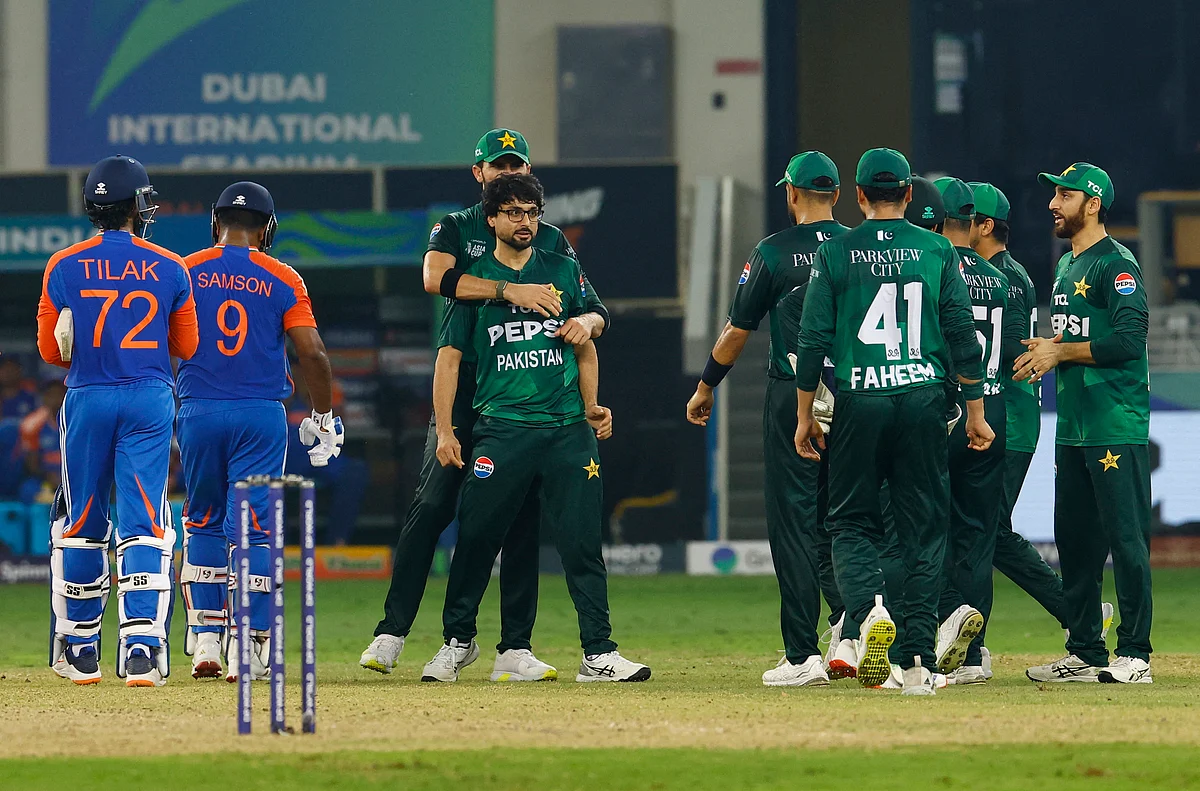
The politicisation of the sport resurfaced even before the start of the 2026 T20 World Cup, when Pakistan announced their decision to boycott the blockbuster clash against bitter rivals India in protest against Bangladesh’s removal from the tournament.
Bangladesh had asked the ICC to shift their World Cup matches from India to Sri Lanka, the co-host, due to security concerns.
But the ICC board voted against Bangladesh’s request before replacing them with Scotland in the T20 showpiece.
Barely a few months after the Asia Cup was thrown into chaos following a handshake controversy, cricket faced an unprecedented crisis when Pakistan decided to boycott the India World Cup game on February 15.
Pakistan argued that the ICC lacked consistency in decision-making after the governing body had allowed India to play their 2025 Champions Trophy matches in Dubai after India’s government decided against sending the team to Pakistan, the host, over security concerns.
But the crisis was resolved after an emergency meeting between the ICC, the Pakistan Cricket Board (PCB) and the Bangladesh Cricket Board (BCB) in Lahore on Sunday.
Experts, however, believe the resolution is a short-term fix to politically driven issues, which could eventually hurt the ICC's hopes of making cricket a truly global sport.
“Significant structural changes (in the ICC) will be required if cricket genuinely wants to be part of the Olympic movement,” veteran Indian journalist Chander Shekhar Luthra told the Khaleej Times.
“The bigger question, however, is whether the ICC is truly serious about long-term Olympic inclusion, or whether it is merely content with participating in the next Games in Los Angeles in 2028. If the aim is consistent Olympic presence, reforms are unavoidable.”
To pursue global ambitions, the ICC, according to Luthra, must free itself from political pressure exerted by powerful cricket boards.
“I don’t see that (changes) happening anytime soon, largely because of the influence of powerful cricket boards — particularly the Indian board — which also operates under political compulsions,” Luthra said.
“For the ICC to move in the right direction, former cricketers must be given meaningful roles, rather than key positions being occupied by individuals with little understanding of the game. What we see instead is governance dominated by those with political backing. And for that reason, I don’t foresee a significant change in the near future.”
Political posturing in cricket could eventually backfire for India, which is seriously considering a bid for the 2036 Olympics.
“India is keen to bid for the 2036 Games, but it is important to remember that the International Olympic Committee (IOC) operates very differently. Its mandate is built on neutrality and impartiality,” Pakistani cricket commentator Nauman Niaz told the Khaleej Times.
“While India has emerged as a major commercial force in global sport with a vast market, the politicisation of sport in recent years is a big concern.”
Niaz pointed to Bangladeshi pace bowler Mustafizur Rahman’s controversial removal from the Indian Premier League (IPL) after political pressure, while calling the ICC’s decision to remove Bangladesh (from the T20 World Cup) politically motivated.
“I am sure the IOC (International Olympic Committee) would not have looked kindly at the entire episode. As India prepares an Olympic bid, such incidents will inevitably come under scrutiny,” he said.
“This also reflects how the ICC has functioned for several years, with many decisions heavily influenced by India. As a result, the IOC may be sceptical about awarding Olympic hosting rights to India.”
Despite being a Pakistani national, Niaz said he would be happy to see India become an Olympic host.
“I grew up admiring the Pakistani sporting legends, but I also admired Sunil Gavaskar, Kapil Dev and Sachin Tendulkar. That’s the beauty of sport,” he said.
“But now it would be very unfortunate if India failed to win the rights to stage the Olympics for non-sporting reasons.
"India’s sporting landscape has transformed significantly in recent years, with consistent Olympic medal performances. The country deserves to host the Olympic Games. But its own approach to politicising sporting events could work against it.”
What's Your Reaction?