






























Crypto clash at Davos over yield and monetary control
A sharp exchange at the World Economic Forum in Davos has underlined widening fault lines between global financial authorities and the cryptocurrency industry, as Brian Armstrong challenged warnings from François Villeroy de Galhau over digital assets, stablecoins and the idea of a so-called bitcoin standard. Speaking during a packed panel discussion on the future of money, Armstrong argued that decentralised finance and blockchain-based currencies were expanding choice, […] The article Crypto clash at Davos over yield and monetary control appeared first on Arabian Post.
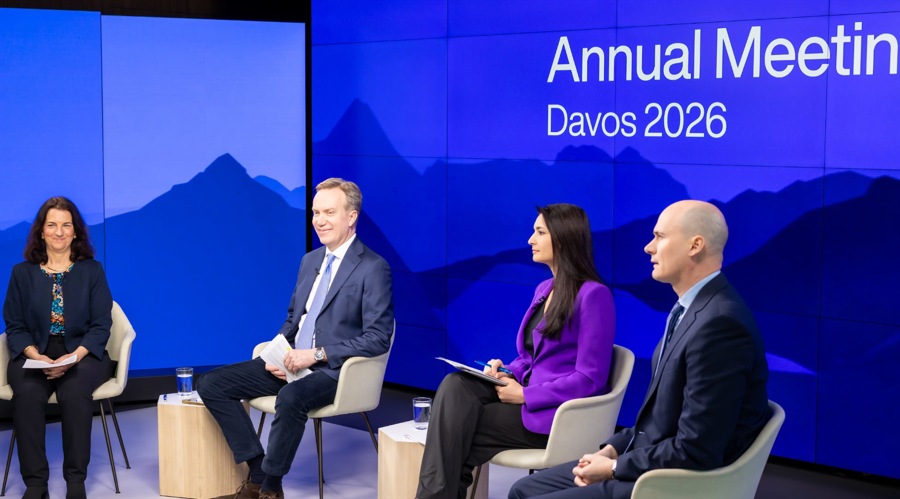
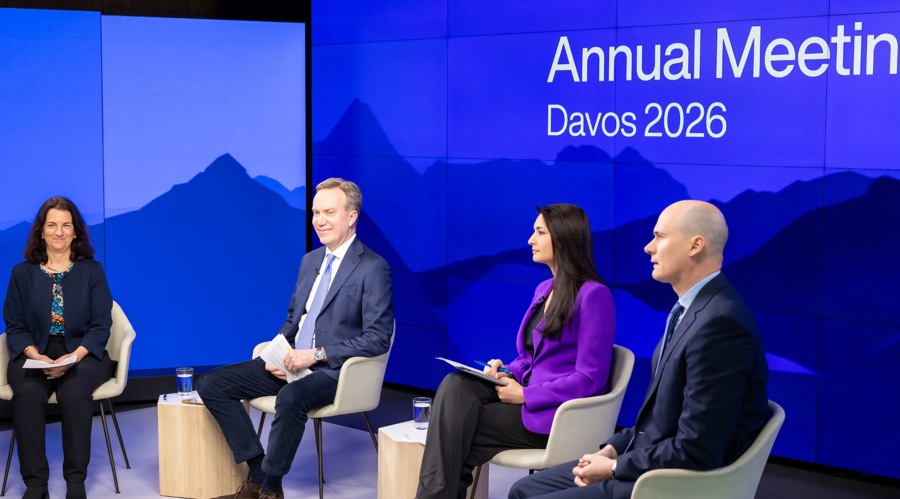
A sharp exchange at the World Economic Forum in Davos has underlined widening fault lines between global financial authorities and the cryptocurrency industry, as Brian Armstrong challenged warnings from François Villeroy de Galhau over digital assets, stablecoins and the idea of a so-called bitcoin standard.
Speaking during a packed panel discussion on the future of money, Armstrong argued that decentralised finance and blockchain-based currencies were expanding choice, efficiency and yield for consumers and businesses. He maintained that digital assets had matured beyond speculative instruments and were increasingly being integrated into mainstream finance through regulated platforms and transparent market structures.
Villeroy, governor of the Banque de France, countered that the growing influence of privately issued digital currencies posed risks to monetary sovereignty and financial stability. He warned that widespread adoption of crypto-based payment systems could weaken central banks’ ability to conduct effective monetary policy, particularly during periods of economic stress.
The exchange was described by Brad Garlinghouse, who shared the stage, as a “spirited” debate reflecting the speed at which financial innovation was colliding with regulatory caution. Garlinghouse, whose company Ripple focuses on cross-border payments using blockchain technology, said policymakers were being forced to grapple with technology that no longer sat at the fringes of finance.
Armstrong defended Coinbase’s position that bitcoin and well-regulated stablecoins could coexist with sovereign currencies rather than replace them. He argued that stablecoins pegged to major currencies were already improving settlement efficiency and lowering transaction costs in global payments, particularly in corridors where traditional banking services were slow or expensive.
Villeroy rejected the notion that such instruments were neutral. He stressed that stablecoins, even when fully backed, could become systemic if they achieved scale without clear oversight, potentially creating parallel monetary systems outside democratic control. He also cautioned against narratives portraying bitcoin as a reliable alternative to fiat currencies, pointing to its volatility and limited use as a unit of account.
The debate took place against a backdrop of intensifying global scrutiny of digital assets. Central banks in Europe, Asia and the Americas are advancing work on central bank digital currencies, partly as a response to the rise of private crypto tokens. At the same time, regulators are tightening rules on exchanges, custody and disclosure following market failures and enforcement actions that exposed weaknesses in governance across parts of the sector.
Industry executives at Davos argued that clearer regulation, rather than outright scepticism, was the path to stability. Armstrong said that jurisdictions offering consistent rules were already attracting investment and talent, while fragmented approaches risked pushing innovation into less transparent markets. He also pushed back on claims that crypto yields were inherently dangerous, saying risk existed across all financial products and could be mitigated through disclosure and supervision.
Villeroy acknowledged the need for innovation but said history showed that unchecked financial experimentation often ended in crises borne by taxpayers. He emphasised that central banks were not opposed to technology, noting progress on digital payment infrastructure and instant settlement systems within the regulated financial framework. The concern, he said, was not innovation itself but loss of control over money creation and transmission.
The exchange highlighted broader tensions at Davos, where enthusiasm for artificial intelligence and digital transformation sat alongside anxiety over regulation, inequality and geopolitical risk. For the crypto sector, the discussion underscored an ongoing struggle to convince policymakers that decentralised systems can be aligned with public-interest objectives.
Arabian Post – Crypto News Network
The article Crypto clash at Davos over yield and monetary control appeared first on Arabian Post.
What's Your Reaction?