


















Belt and Road outlays hit 2025 peak
Arabian Post Staff -Dubai China’s Belt and Road Initiative recorded $213.5 billion in engagement during 2025, the highest annual level since its launch more than a decade ago, as a wave of construction contracts and energy investments reshaped the geographic balance of the programme and propelled the Middle East into the top ranks of recipients. Data compiled in the China Belt and Road Initiative Investment Report […] The article Belt and Road outlays hit 2025 peak appeared first on Arabian Post.
Arabian Post Staff -Dubai
China’s Belt and Road Initiative recorded $213.5 billion in engagement during 2025, the highest annual level since its launch more than a decade ago, as a wave of construction contracts and energy investments reshaped the geographic balance of the programme and propelled the Middle East into the top ranks of recipients.
Data compiled in the China Belt and Road Initiative Investment Report 2025, produced by the Griffith Asia Institute and the Green Finance & Development Centre in Brisbane, show that construction contracts accounted for $128.4 billion of the total, while investments reached $85.2 billion. The combined figure marks a sharp rebound from the slowdown that followed the pandemic and debt strains in several borrowing countries.
Record Belt and Road spending in 2025 underscores how Beijing has recalibrated the initiative after years of scrutiny over debt sustainability, environmental impact and political risk. Launched by President Xi Jinping in 2013, the programme was designed to expand China’s trade and infrastructure links across Asia, Africa, Europe and Latin America. It has since evolved into a sprawling network of transport corridors, ports, energy plants and digital infrastructure.
The 2025 surge was driven largely by construction activity, which rose to its strongest level in the initiative’s history. Major projects included transport links, industrial parks and large-scale energy facilities, particularly in oil- and gas-producing economies seeking to diversify infrastructure and deepen ties with China. Analysts note that Chinese state-owned enterprises remain central to the construction push, backed by policy banks and state lenders.
Energy emerged as the dominant sector within overall engagement. Investments flowed into both fossil fuel and renewable projects, reflecting a dual strategy that aligns with host countries’ development plans while securing supply chains for China’s own economy. Solar, wind and hydropower projects featured prominently, alongside continued financing for gas-fired plants and transmission networks.
The Middle East’s ascent into the top tier of Belt and Road recipients marks a notable shift from earlier years when South and Southeast Asia absorbed much of the funding. Countries in the Gulf have expanded cooperation with Beijing through strategic partnerships and participation in logistics corridors linking Asia to Europe. Infrastructure agreements have coincided with broader diplomatic engagement, including energy trade denominated in local currencies and joint industrial ventures.
Researchers behind the report argue that the initiative has become more selective and commercially oriented compared with its early phase. While aggregate volumes have climbed, project screening appears more rigorous, with greater emphasis on financial viability and risk management. Several borrowing countries that faced debt distress earlier in the decade have renegotiated terms with Chinese lenders, prompting a reassessment of exposure and credit standards.
Construction contracts, which represent engineering and procurement deals undertaken by Chinese firms, differ from equity investments and lending. The $128.4 billion recorded in 2025 indicates that Chinese contractors are regaining overseas momentum after a period of retrenchment. Investments of $85.2 billion, meanwhile, reflect capital stakes and joint ventures that tie Chinese entities more closely to host economies.
The scale of 2025 engagement exceeds previous peaks recorded during the initiative’s expansion phase in the mid-2010s. After 2018, volumes declined amid geopolitical tensions, tighter capital controls and growing concern about debt sustainability. The pandemic compounded those pressures, disrupting supply chains and delaying projects.
Beijing responded by repositioning the initiative as “high-quality” and “green”, pledging to reduce coal financing overseas and expand support for renewable energy. Data in the 2025 report suggest that renewable capacity now accounts for a larger share of energy-related activity than in earlier years, though fossil fuel projects remain significant in absolute terms.
Economists caution that headline figures capture commitments and contracts rather than disbursements, and that implementation risks remain. Political instability, currency volatility and regulatory shifts in host countries can affect project timelines and returns. At the same time, rising competition from other infrastructure initiatives, including programmes backed by the United States, the European Union and Japan, is reshaping the landscape for global development finance.
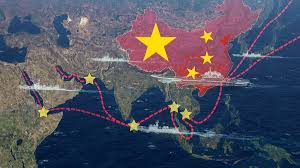
China’s outward investment also intersects with broader strategic objectives. Transport corridors linking western China to Central Asia and the Middle East are intended to secure alternative trade routes and reduce reliance on maritime chokepoints. Digital infrastructure, including telecommunications networks and data centres, extends the initiative into new sectors with long-term geopolitical implications.
The article Belt and Road outlays hit 2025 peak appeared first on Arabian Post.
What's Your Reaction?