






























Yoga helps in speedy opioid withdrawal recovery: Study
Yoga can aid in the speedy recovery of people with opioid withdrawal, as well as improve anxiety, sleep, and pain in them, according to a study.Opioid withdrawal involves physical symptoms like diarrhoea, insomnia, fever, pain, anxiety, and depression, and autonomic signs such as pupil dilation, runny nose, goosebumps, anorexia, yawning, nausea, vomiting, and sweating.These symptoms result from sympathetic nervous system overactivity due to dysregulated noradrenergic outflow.The study led by researchers from the National Institute of Mental Health and Neurosciences (NIMHANS), Bengaluru, and Harvard Medical School, US, calls for integrating yoga into withdrawal protocols as a neurobiologically informed intervention. They noted that yoga will help address core regulatory processes beyond symptom management.“In this trial, yoga significantly enhanced opioid withdrawal recovery through measurable autonomic and clinical improvements, supporting its integration into withdrawal protocols as a neurobiologically informed intervention,” said Suddala Goutham, from the Department of Integrative Medicine at NIMHANS.Opioid use disorder (OUD), characterised by recurrent opioid use, leading to significant physical, psychological, and social problems, is a significant global public health challenge.In 2022, an estimated 60 million people worldwide used opioids nonmedically, yet only 1 in 11 individuals with drug use disorders received treatment. In India, a 2019 national survey indicated a 2.1 per cent prevalence of opioid use.Opioid withdrawal involves sympathetic hyperactivity and reduced parasympathetic tone, which standard pharmacological treatments may not adequately address, contributing to relapse vulnerability.To evaluate yoga as an adjuvant therapy to accelerate opioid withdrawal recovery, the team conducted a randomised clinical trial of 59 male participants (30 yoga and 29 control participants) with opioid use disorder.The participants who received yoga alongside standard buprenorphine treatment achieved withdrawal stabilisation 4.4 times faster than controls. They also showed significant improvements in heart rate variability, anxiety, sleep, and pain measures.“In this randomised clinical trial, adjuvant yoga therapy significantly accelerated opioid withdrawal recovery while addressing autonomic dysregulation. The concurrent physiological, psychological, and symptomatic improvements suggest that yoga may restore core regulatory processes beyond symptom management,” said the team in the paper, published in the JAMA Psychiatry.“By targeting parasympathetic restoration, yoga may fill a critical therapeutic gap in standard OUD care, supporting integration into withdrawal protocols as a neurobiologically informed intervention with potential economic benefits,” they added.According to previous studies on yoga, adults who practice yoga with breathing and relaxation exercises at least three times a week may have lower blood pressure than people who don’t.For the study, researchers analysed data from 49 trials with a total of 3,517 participants who were typically middle-aged, overweight women and men who already had high blood pressure or were close to developing the condition. These smaller trials assessed blood pressure before and after participants were randomly assigned either to doing yoga or to a control group without exercise programmes.Overall, the people in the yoga groups experienced average reductions in systolic blood pressure of 5 mmHG (millimeters of mercury) more than those in the control groups, and diastolic blood pressure was reduced by 3.9 mmHG more with yoga.When people with high blood pressure did yoga three times a week in sessions that also included breathing and relaxation exercises, they experienced average decreases of 11 mmHG more than control groups in systolic blood pressure and 6 mmHG more in diastolic blood pressure.“Our results not only showed that yoga can be just as, or even more effective than aerobic exercise to reduce blood pressure; but also quantitatively showed the importance of emphasizing yoga breathing techniques and mental relaxation/meditation along with physical forms during practice,” said lead study author Yin Wu, a researcher in kinesiology at the University of Connecticut in Storrs.Yoga appeared beneficial, but less so, when people practiced regularly but didn’t focus on breathing and relaxation or meditation. Under these circumstances, yoga was associated with average drops of 6 mmHG more in systolic blood pressure and 3 mmHG more in diastolic blood pressure compared to the groups doing no exercise.In adults, a normal or healthy blood pressure reading is considered to be 120/80 mmHG or lower.People in the study started out with average blood pressure readings of 129.3/80.7 mmHG. This suggests the reductions associated with yoga might be enough to return some people to the normal range.Agencies
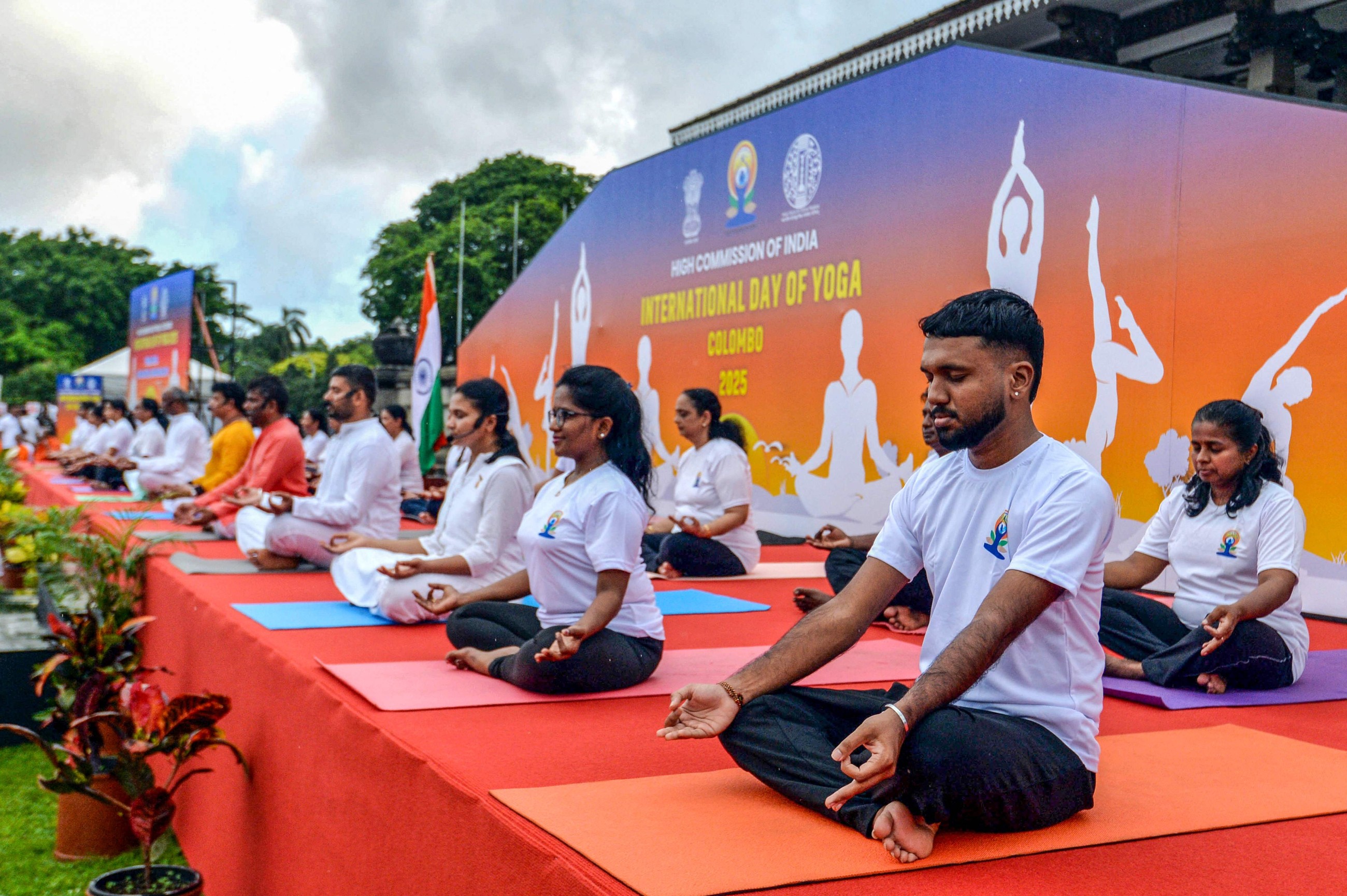
Yoga can aid in the speedy recovery of people with opioid withdrawal, as well as improve anxiety, sleep, and pain in them, according to a study.Opioid withdrawal involves physical symptoms like diarrhoea, insomnia, fever, pain, anxiety, and depression, and autonomic signs such as pupil dilation, runny nose, goosebumps, anorexia, yawning, nausea, vomiting, and sweating.These symptoms result from sympathetic nervous system overactivity due to dysregulated noradrenergic outflow.The study led by researchers from the National Institute of Mental Health and Neurosciences (NIMHANS), Bengaluru, and Harvard Medical School, US, calls for integrating yoga into withdrawal protocols as a neurobiologically informed intervention. They noted that yoga will help address core regulatory processes beyond symptom management.“In this trial, yoga significantly enhanced opioid withdrawal recovery through measurable autonomic and clinical improvements, supporting its integration into withdrawal protocols as a neurobiologically informed intervention,” said Suddala Goutham, from the Department of Integrative Medicine at NIMHANS.Opioid use disorder (OUD), characterised by recurrent opioid use, leading to significant physical, psychological, and social problems, is a significant global public health challenge.In 2022, an estimated 60 million people worldwide used opioids nonmedically, yet only 1 in 11 individuals with drug use disorders received treatment. In India, a 2019 national survey indicated a 2.1 per cent prevalence of opioid use.Opioid withdrawal involves sympathetic hyperactivity and reduced parasympathetic tone, which standard pharmacological treatments may not adequately address, contributing to relapse vulnerability.To evaluate yoga as an adjuvant therapy to accelerate opioid withdrawal recovery, the team conducted a randomised clinical trial of 59 male participants (30 yoga and 29 control participants) with opioid use disorder.The participants who received yoga alongside standard buprenorphine treatment achieved withdrawal stabilisation 4.4 times faster than controls. They also showed significant improvements in heart rate variability, anxiety, sleep, and pain measures.“In this randomised clinical trial, adjuvant yoga therapy significantly accelerated opioid withdrawal recovery while addressing autonomic dysregulation. The concurrent physiological, psychological, and symptomatic improvements suggest that yoga may restore core regulatory processes beyond symptom management,” said the team in the paper, published in the JAMA Psychiatry.“By targeting parasympathetic restoration, yoga may fill a critical therapeutic gap in standard OUD care, supporting integration into withdrawal protocols as a neurobiologically informed intervention with potential economic benefits,” they added.According to previous studies on yoga, adults who practice yoga with breathing and relaxation exercises at least three times a week may have lower blood pressure than people who don’t.For the study, researchers analysed data from 49 trials with a total of 3,517 participants who were typically middle-aged, overweight women and men who already had high blood pressure or were close to developing the condition. These smaller trials assessed blood pressure before and after participants were randomly assigned either to doing yoga or to a control group without exercise programmes.Overall, the people in the yoga groups experienced average reductions in systolic blood pressure of 5 mmHG (millimeters of mercury) more than those in the control groups, and diastolic blood pressure was reduced by 3.9 mmHG more with yoga.When people with high blood pressure did yoga three times a week in sessions that also included breathing and relaxation exercises, they experienced average decreases of 11 mmHG more than control groups in systolic blood pressure and 6 mmHG more in diastolic blood pressure.“Our results not only showed that yoga can be just as, or even more effective than aerobic exercise to reduce blood pressure; but also quantitatively showed the importance of emphasizing yoga breathing techniques and mental relaxation/meditation along with physical forms during practice,” said lead study author Yin Wu, a researcher in kinesiology at the University of Connecticut in Storrs.Yoga appeared beneficial, but less so, when people practiced regularly but didn’t focus on breathing and relaxation or meditation. Under these circumstances, yoga was associated with average drops of 6 mmHG more in systolic blood pressure and 3 mmHG more in diastolic blood pressure compared to the groups doing no exercise.In adults, a normal or healthy blood pressure reading is considered to be 120/80 mmHG or lower.People in the study started out with average blood pressure readings of 129.3/80.7 mmHG. This suggests the reductions associated with yoga might be enough to return some people to the normal range.Agencies
What's Your Reaction?








DDP Editor
Admin managing news updates, RSS feed curation, and PR content publishing. Focused on timely, accurate, and impactful information delivery.