






























Winter Ramadan in UAE: Shorter fasting hours as likely dates of holy month, Eid revealed
Ramadan this year falls during the winter season in the UAE, making fasting more comfortable, an astronomer has said, as she revealed the likely dates of the holy month and Islamic festival Eid Al Fitr.Islamic months last either 29 or 30 days, depending on the sighting of the crescent moon.With Tuesday, January 20, confirmed as the first day of Shaaban — the month that precedes Ramadan in the Hijri lunar calendar — astronomers can now calculate the most likely dates of Ramadan and Eid more accurately. Stay up to date with the latest news. Follow KT on WhatsApp Channels.“Ramadan this year falls toward the end of winter and the beginning of early spring in the UAE,” said Khadijah Hasan Ahmad, Operations Manager at the Dubai Astronomy Group, speaking to Khaleej Times.Shaaban began on January 20 after the crescent moon was sighted on January 19, in line with astronomical calculations. When will Ramadan begin?The UAE will search the night sky for the Ramadan crescent on February 17. However, it’s unlikely to be spotted on that night. According to Khadijah, the best chance to sight the moon will be on the evening of February 18. Ramadan would then begin on February 19.The calendar issued by the General Authority of Islamic Affairs, Endowments and Zakat (Awqaf) also lists February 19 as the first day of Ramadan.3-day weekend for Eid Al Fitr?A month later, the UAE will search the night sky again for the Shawwal crescent, marking the end of Ramadan.“The most likely evening to sight the Shawwal crescent is March 19, which would place Eid Al Fitr on March 20, if the crescent is confirmed,” Khadijah said.The Awqaf calendar lists March 20 as Shawwal 1, when Eid Al Fitr is marked.If these calculations hold, the holy month would have lasted 29 days.Eid Al Fitr is celebrated over the first three days of Shawwal, which are designated public holidays in the UAE. If Eid follows astronomical calculations, the holiday would run from Friday, March 20, to Sunday, March 22 (Shawwal 1–3), giving those with a Saturday–Sunday weekend three days off.Fasting hoursAccording to Khadijah, Ramadan this year falls during a seasonal transition in the UAE.“This means generally mild and pleasant weather, especially in the evenings, with cooler nights and gradually warming days as the month progresses,” she said. “Daytime temperatures are expected to range from the mid-20s°C early in the month, gradually rising to the high-20s°C by late Ramadan, making it a relatively comfortable period for fasting.”As previously reported by Khaleej Times, fasting hours this year are expected to be around 30 minutes shorter than Ramadan 2025.When is Ramadan 2026? Predicted start date of holy month, 3-day Eid Al Fitr break revealedUAE: Likely dates for Ramadan, Eid Al Fitr, Eid Al Adha revealedLook: Shaban 1447 AH crescent photographed in Abu Dhabi
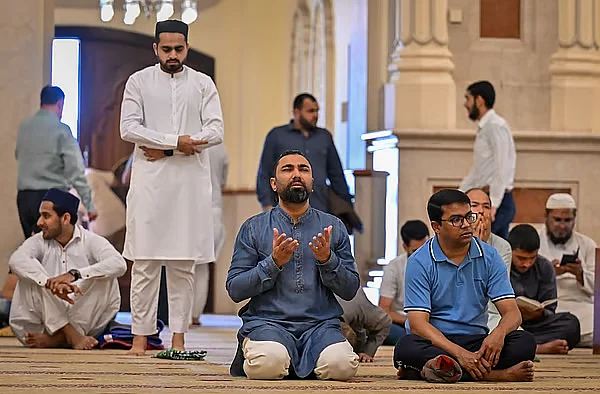
Ramadan this year falls during the winter season in the UAE, making fasting more comfortable, an astronomer has said, as she revealed the likely dates of the holy month and Islamic festival Eid Al Fitr.
Islamic months last either 29 or 30 days, depending on the sighting of the crescent moon.
With Tuesday, January 20, confirmed as the first day of Shaaban — the month that precedes Ramadan in the Hijri lunar calendar — astronomers can now calculate the most likely dates of Ramadan and Eid more accurately.
Stay up to date with the latest news. Follow KT on WhatsApp Channels.
“Ramadan this year falls toward the end of winter and the beginning of early spring in the UAE,” said Khadijah Hasan Ahmad, Operations Manager at the Dubai Astronomy Group, speaking to Khaleej Times.
Shaaban began on January 20 after the crescent moon was sighted on January 19, in line with astronomical calculations.
When will Ramadan begin?
The UAE will search the night sky for the Ramadan crescent on February 17. However, it’s unlikely to be spotted on that night.
According to Khadijah, the best chance to sight the moon will be on the evening of February 18. Ramadan would then begin on February 19.
The calendar issued by the General Authority of Islamic Affairs, Endowments and Zakat (Awqaf) also lists February 19 as the first day of Ramadan.
3-day weekend for Eid Al Fitr?
A month later, the UAE will search the night sky again for the Shawwal crescent, marking the end of Ramadan.
“The most likely evening to sight the Shawwal crescent is March 19, which would place Eid Al Fitr on March 20, if the crescent is confirmed,” Khadijah said.
The Awqaf calendar lists March 20 as Shawwal 1, when Eid Al Fitr is marked.
If these calculations hold, the holy month would have lasted 29 days.
Eid Al Fitr is celebrated over the first three days of Shawwal, which are designated public holidays in the UAE. If Eid follows astronomical calculations, the holiday would run from Friday, March 20, to Sunday, March 22 (Shawwal 1–3), giving those with a Saturday–Sunday weekend three days off.
Fasting hours
According to Khadijah, Ramadan this year falls during a seasonal transition in the UAE.
“This means generally mild and pleasant weather, especially in the evenings, with cooler nights and gradually warming days as the month progresses,” she said. “Daytime temperatures are expected to range from the mid-20s°C early in the month, gradually rising to the high-20s°C by late Ramadan, making it a relatively comfortable period for fasting.”
As previously reported by Khaleej Times, fasting hours this year are expected to be around 30 minutes shorter than Ramadan 2025.
What's Your Reaction?