































Samsung accelerates HBM4 output for AI demand
Samsung Electronics plans to begin mass production of its next-generation high-bandwidth memory chips, HBM4, next month, positioning the company to step up supplies to key artificial intelligence customers led by Nvidia as competition in advanced memory intensifies. The South Korean chipmaker has been racing to finalise yields and qualification for HBM4, a critical component for the latest generation of AI accelerators that demand faster data transfer and […] The article Samsung accelerates HBM4 output for AI demand appeared first on Arabian Post.
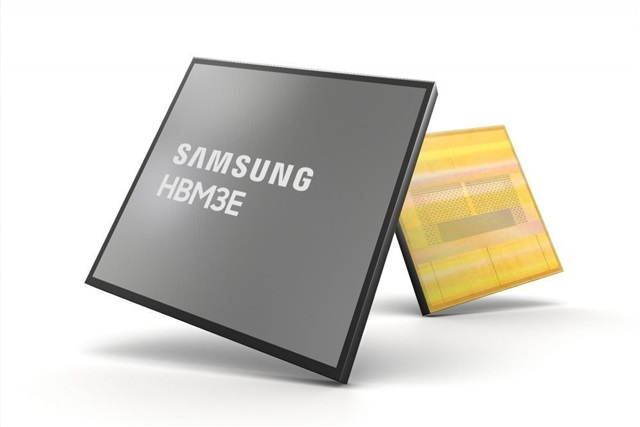
Samsung Electronics plans to begin mass production of its next-generation high-bandwidth memory chips, HBM4, next month, positioning the company to step up supplies to key artificial intelligence customers led by Nvidia as competition in advanced memory intensifies.
The South Korean chipmaker has been racing to finalise yields and qualification for HBM4, a critical component for the latest generation of AI accelerators that demand faster data transfer and lower power consumption than existing HBM3E products. Industry officials say the company is targeting initial commercial volumes shortly after production starts, with early batches earmarked for strategic customers that are scaling data centre deployments.
HBM4 represents a significant technological leap over current offerings. It is designed to deliver higher bandwidth per stack, improved energy efficiency and tighter integration with logic chips, enabling more powerful AI training and inference workloads. For Nvidia, whose upcoming GPU platforms rely heavily on advanced memory performance, assured access to HBM4 is viewed as central to maintaining its dominance in the AI hardware market.
Samsung’s move comes as rivals intensify their own efforts. SK Hynix, the market leader in high-bandwidth memory, has secured a strong position as the primary supplier of HBM3 and HBM3E to Nvidia and other AI chip designers, while Micron Technology has been pushing to qualify its products with large customers. The battle for HBM4 contracts is widely seen as the next decisive phase, given expectations that demand for AI accelerators will continue to outstrip supply well into the second half of the decade.
Executives at Samsung have acknowledged challenges in catching up in the premium HBM segment, particularly around yield stability and customer qualification. Over the past year, the company has invested heavily in process optimisation, advanced packaging and testing capabilities to meet stringent performance requirements. Engineers have also focused on improving thermal management, a key issue as memory stacks grow taller and power densities rise.
Market analysts expect Nvidia to diversify its supplier base for HBM4 to reduce dependency risks, even as it continues to rely on SK Hynix for a substantial share of near-term needs. For Samsung, securing meaningful volumes in Nvidia’s supply chain would mark a turnaround after losing ground in earlier HBM cycles and could help restore confidence in its memory roadmap.
Beyond Nvidia, Samsung is believed to be engaging with other AI chip developers and cloud service providers exploring custom accelerators. The expansion of generative AI applications across enterprise software, consumer services and scientific computing has driven unprecedented demand for high-performance memory, with HBM becoming one of the most capacity-constrained components in the semiconductor industry.
The timing of Samsung’s HBM4 production push also reflects broader shifts in the memory market. After a prolonged downturn that weighed on profits across the sector, pricing power has improved as inventories normalised and AI-related demand surged. High-end memory products such as HBM now account for a growing share of capital expenditure priorities, even as traditional DRAM and NAND markets remain more cyclical.
Samsung’s semiconductor division has indicated that advanced memory will be a central pillar of its strategy, alongside logic chip manufacturing. The company has been aligning its foundry and memory roadmaps more closely, aiming to offer integrated solutions that combine leading-edge logic with proprietary memory technologies, an approach that could appeal to customers seeking tighter system-level optimisation.
Supply chain considerations are also shaping HBM4 strategies. Advanced packaging capacity, including through-silicon vias and hybrid bonding, has emerged as a bottleneck across the industry. Samsung has expanded internal capabilities while also working with equipment suppliers to secure tools needed for higher-volume output, a move intended to avoid delays once customer demand ramps up.
The article Samsung accelerates HBM4 output for AI demand appeared first on Arabian Post.
What's Your Reaction?