Ramadan under open skies: Why iftar hikes are drawing UAE residents into the mountains
An hour before sunset, hikers gather at the trailhead with backpacks instead of dining tables. By the time the call to prayer approaches, they are deep in the mountains, ready to break their fast together with dates, water and shared meals. Hikers say the simplicity of the moment captures the true essence of Ramadan — generosity, reflection and togetherness, far from the distractions of everyday life.Ramadan Prayer Timings For organised hiking groups across the UAE, Ramadan has become one of the most meaningful times of the year to be outdoors — not despite fasting, but because of it. Mohammed Al Kaabi, founder of UAE Adventures Team, said the group has been running official iftar hikes for five years, evolving from informal outings among friends into structured activities that prioritise both safety and religious practice. Stay up to date with the latest news. Follow KT on WhatsApp Channels.“We offer several options during Ramadan, because not everyone experiences fasting the same way,” he explained. One format sees participants gather after iftar, pray together in congregation, and then begin hiking around 9pm. “One of us performs the role of the imam. This is very important to capture the religious spirit of Ramadan rituals,” Al Kaabi explained.Another option involves meeting earlier in the afternoon for a light hike, breaking the fast on the mountain with simple food to “ease the hunger”, before descending and having a full meal later in the evening. Some hikes are completed entirely before maghrib, with participants heading to a nearby restaurant to break their fast together, while others take place before suhoor, with hikers eating at the summit before heading down. “The most important part is feeling the religious spirit of Ramadan,” Al Kaabi said. He noted that while some hikers prefer the golden hour before sunset, the most popular time tends to be after taraweeh prayers. “After 10pm, all the tracks become full. People have more energy, and it’s easier for them to exert effort safely.”That shift in timing is reflected across the UAE’s outdoor community.At Outdoorzy Adventures, founder Alaa Masood said the group offers two Ramadan-specific experiences, both designed to be accessible and inclusive. The first is a free, light-to-moderate iftar hike held in areas where participants can watch the sunset and hear the call to prayer. “We target places that are accessible for all levels,” Masood said, adding that the group often chooses Fossil Rock in Mleiha because of its panoramic views. Hikers break their fast with water, dates and light snacks before descending and heading to a nearby restaurant for a full iftar. “Some people worry about hiking while fasting,” Masood said. “But we explain that it’s a simple hike, and we keep a light pace to avoid fatigue.”Non-fasting participants also join, he added, and are mindful not to drink water in front of those who are fasting. For safety reasons, group sizes are capped at 25 to 30 people, particularly because the descent takes place after dark.Outdoorzy also organises Ramadan potluck iftars in nature, usually in the desert between Abu Dhabi and Dubai, allowing members from across the emirates to gather in one location.For Yousuf Elabbasy, founder of Grasp the Adventure, the appeal of iftar hikes lies in the deep sense of disconnection they offer — and the connection that follows. “Our iftar hikes started in 2023, when the holy month began aligning with the beautiful UAE winter season.”“Hiking gave me the opportunity to truly disconnect from the busy lives we lead — the visual and noise pollution, the stress of work, the social pressures, and everything in between.”Yousuf Elabbasy Grasp's hikes typically begin an hour before iftar, with time set aside for introductions and safety briefings before participants head out. When the sun sets, the group pauses — sometimes by a canyon pool, sometimes at a mountain saddle overlooking the range ahead.“That’s when we experience the true essence of Ramadan,” Elabbasy said. “Before you know it, you’re eating a date someone passed to you. A bag of almonds lands in your lap. You split your sandwich with someone, and in return receive a piece of fruit from another.”After praying together, the group continues hiking for another two hours, before ending the night with a suhoor barbecue in the mountains. “The experience is magical,” he said. “We always leave feeling energised, warm, and deeply connected to our community.”While turnout during Ramadan is slightly lower than usual due to fasting, organisers say those who do show up are drawn by something deeper than fitness. Away from restaurants, phones and city lights, iftar hikes offer a rare pause — a chance to break the fast in silence, share food with strangers, and watch the sky change colour together. For many, that simplicity is exactly the point.Ramadan 2026: Some UAE residents travel for silence, not sightseeingRamadan in UAE: How you can make iftars memorable under cool

An hour before sunset, hikers gather at the trailhead with backpacks instead of dining tables. By the time the call to prayer approaches, they are deep in the mountains, ready to break their fast together with dates, water and shared meals.
Hikers say the simplicity of the moment captures the true essence of Ramadan — generosity, reflection and togetherness, far from the distractions of everyday life.Ramadan Prayer Timings
For organised hiking groups across the UAE, Ramadan has become one of the most meaningful times of the year to be outdoors — not despite fasting, but because of it. Mohammed Al Kaabi, founder of UAE Adventures Team, said the group has been running official iftar hikes for five years, evolving from informal outings among friends into structured activities that prioritise both safety and religious practice.
Stay up to date with the latest news. Follow KT on WhatsApp Channels.
“We offer several options during Ramadan, because not everyone experiences fasting the same way,” he explained. One format sees participants gather after iftar, pray together in congregation, and then begin hiking around 9pm. “One of us performs the role of the imam. This is very important to capture the religious spirit of Ramadan rituals,” Al Kaabi explained.
Another option involves meeting earlier in the afternoon for a light hike, breaking the fast on the mountain with simple food to “ease the hunger”, before descending and having a full meal later in the evening. Some hikes are completed entirely before maghrib, with participants heading to a nearby restaurant to break their fast together, while others take place before suhoor, with hikers eating at the summit before heading down.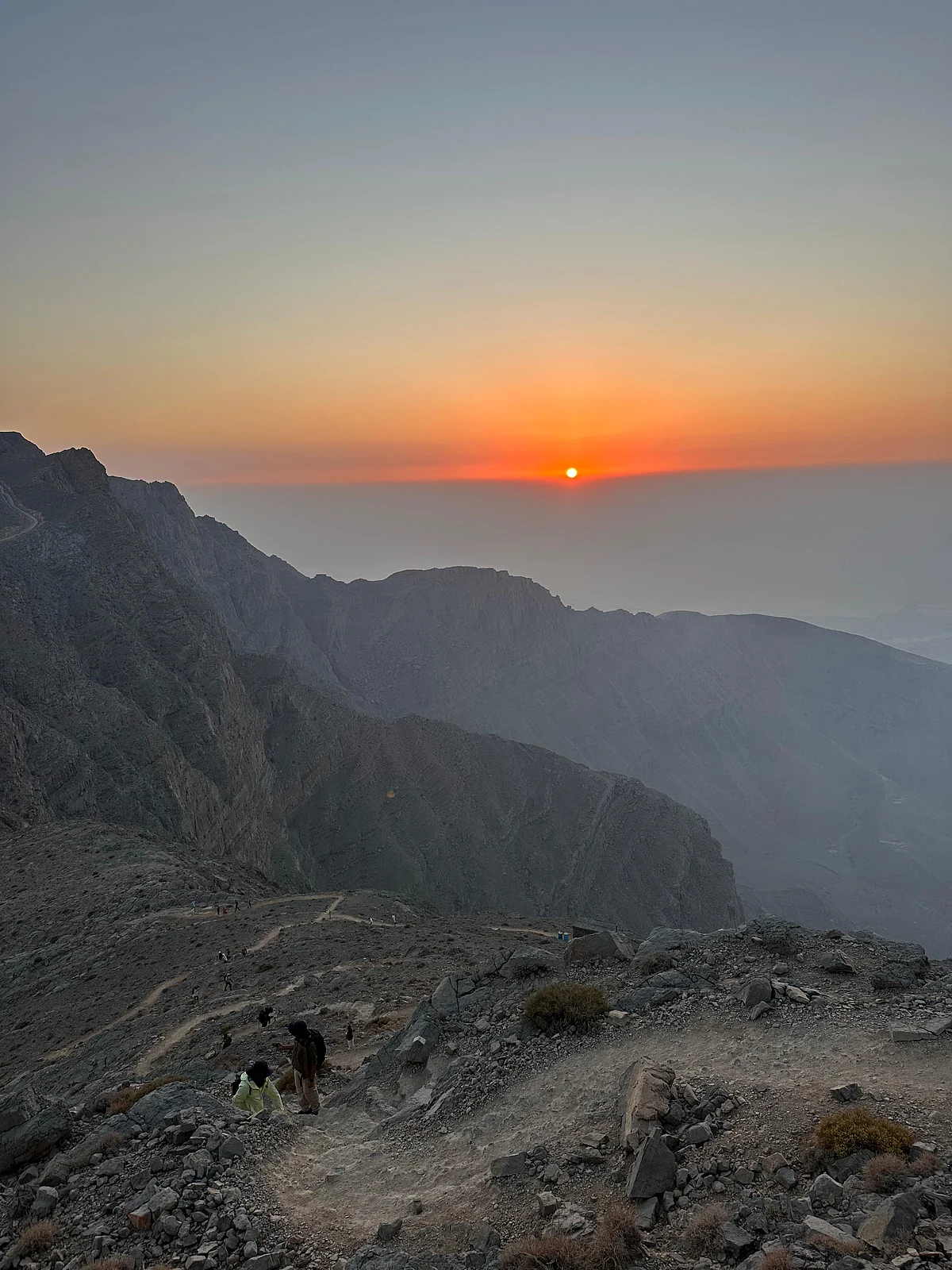
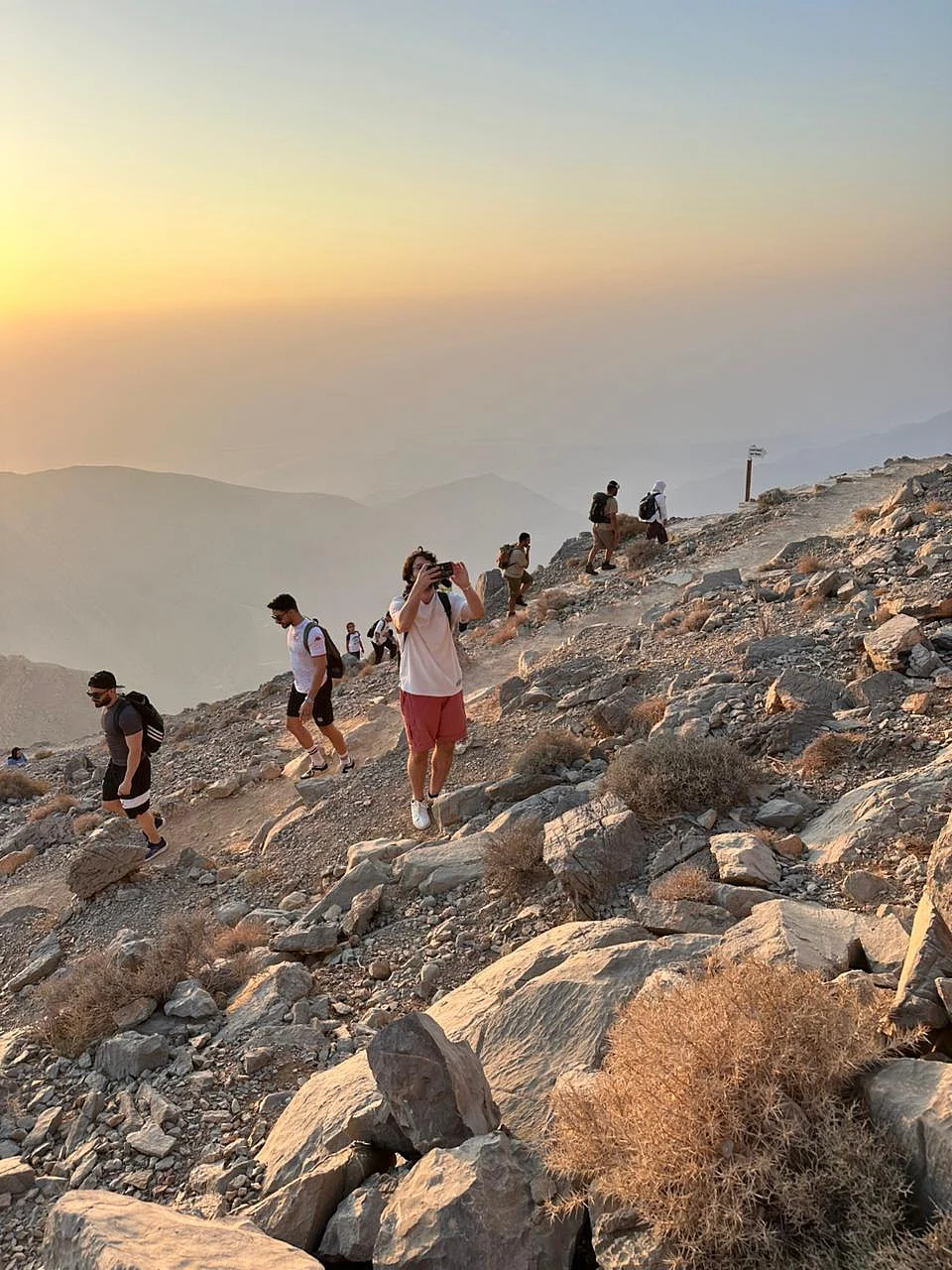
“The most important part is feeling the religious spirit of Ramadan,” Al Kaabi said. He noted that while some hikers prefer the golden hour before sunset, the most popular time tends to be after taraweeh prayers. “After 10pm, all the tracks become full. People have more energy, and it’s easier for them to exert effort safely.”
That shift in timing is reflected across the UAE’s outdoor community.
At Outdoorzy Adventures, founder Alaa Masood said the group offers two Ramadan-specific experiences, both designed to be accessible and inclusive. The first is a free, light-to-moderate iftar hike held in areas where participants can watch the sunset and hear the call to prayer. “We target places that are accessible for all levels,” Masood said, adding that the group often chooses Fossil Rock in Mleiha because of its panoramic views.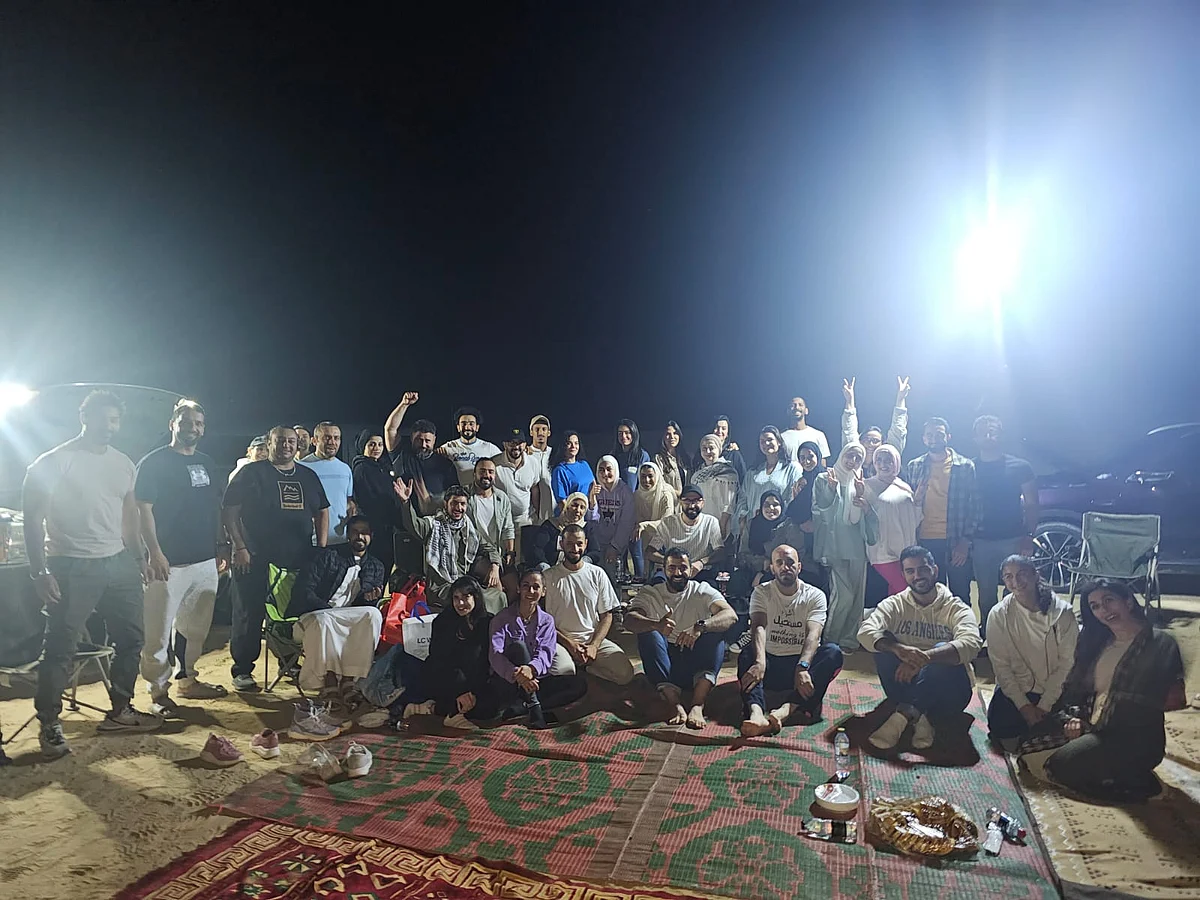
Hikers break their fast with water, dates and light snacks before descending and heading to a nearby restaurant for a full iftar. “Some people worry about hiking while fasting,” Masood said. “But we explain that it’s a simple hike, and we keep a light pace to avoid fatigue.”
Non-fasting participants also join, he added, and are mindful not to drink water in front of those who are fasting. For safety reasons, group sizes are capped at 25 to 30 people, particularly because the descent takes place after dark.
Outdoorzy also organises Ramadan potluck iftars in nature, usually in the desert between Abu Dhabi and Dubai, allowing members from across the emirates to gather in one location.
For Yousuf Elabbasy, founder of Grasp the Adventure, the appeal of iftar hikes lies in the deep sense of disconnection they offer — and the connection that follows. “Our iftar hikes started in 2023, when the holy month began aligning with the beautiful UAE winter season.”
“Hiking gave me the opportunity to truly disconnect from the busy lives we lead — the visual and noise pollution, the stress of work, the social pressures, and everything in between.” Yousuf Elabbasy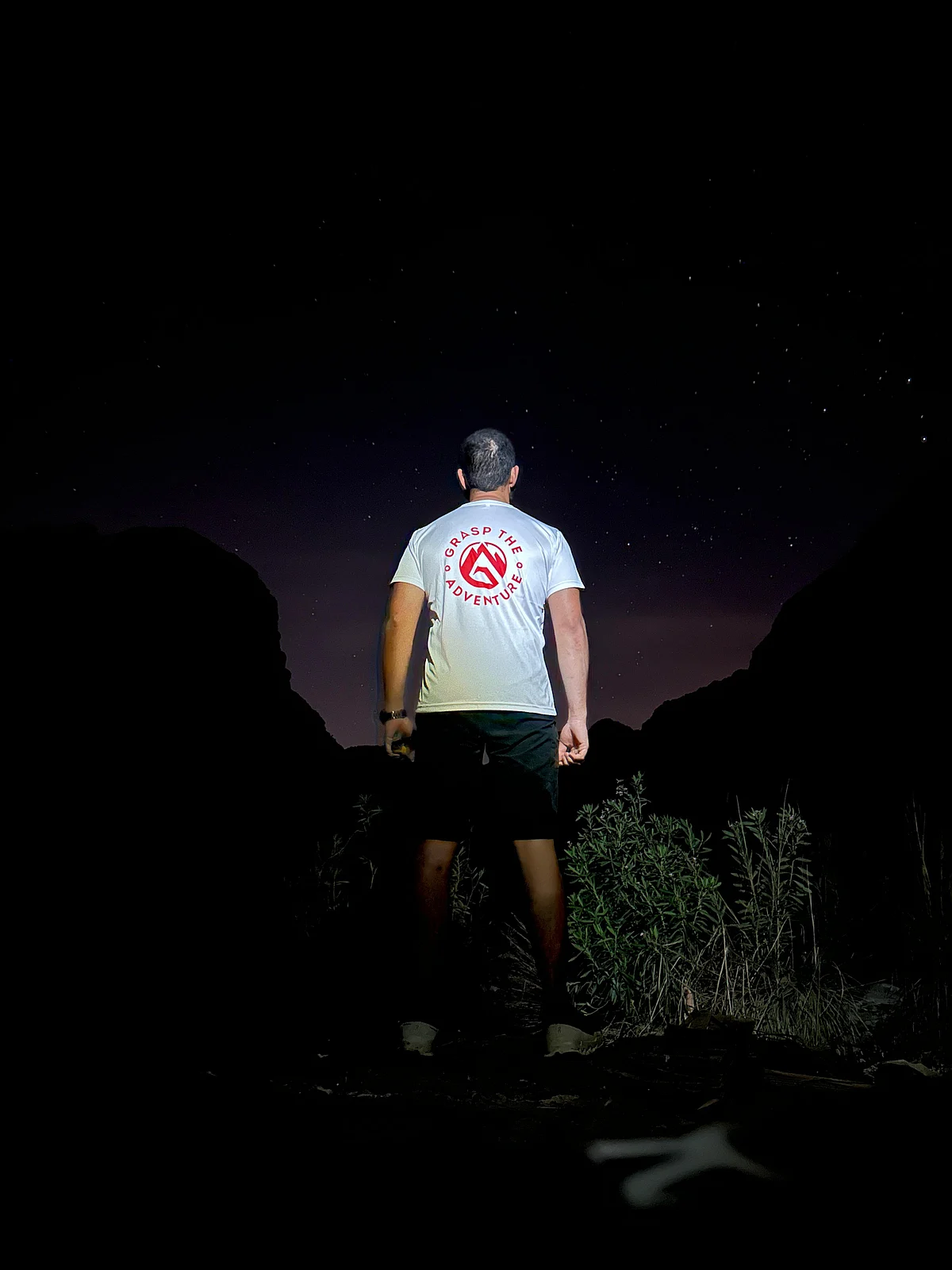
Grasp's hikes typically begin an hour before iftar, with time set aside for introductions and safety briefings before participants head out. When the sun sets, the group pauses — sometimes by a canyon pool, sometimes at a mountain saddle overlooking the range ahead.
“That’s when we experience the true essence of Ramadan,” Elabbasy said. “Before you know it, you’re eating a date someone passed to you. A bag of almonds lands in your lap. You split your sandwich with someone, and in return receive a piece of fruit from another.”
After praying together, the group continues hiking for another two hours, before ending the night with a suhoor barbecue in the mountains. “The experience is magical,” he said. “We always leave feeling energised, warm, and deeply connected to our community.”
While turnout during Ramadan is slightly lower than usual due to fasting, organisers say those who do show up are drawn by something deeper than fitness. Away from restaurants, phones and city lights, iftar hikes offer a rare pause — a chance to break the fast in silence, share food with strangers, and watch the sky change colour together. For many, that simplicity is exactly the point.
What's Your Reaction?