





























Omnichannel engagement: the new standard for international student recruitment
With competition intensifying, institutions around the world have to work harder than ever to get prospective students' attention. Here's the best approach to make your mark, writes Nicolas Chu. The post Omnichannel engagement: the new standard for international student recruitment appeared first on The PIE News.

33% of international students abandon an application because of communication issues alone according to the Sinorbis International Student Survey (SISS). This drop-off is rarely caused by a lack of interest or information about an institution; it is driven by how slow, fragmented and difficult university communication can feel from the perspective of the student.
This isn’t an isolated statistic; data from the SISS clearly shows that student expectations are changing rapidly. When you consider, for example, that nearly 70% of students expect a response within a couple of days, yet more than a third report waiting a week or longer, it’s clear that the gap with the reality versus those expectations is widening.
The impact of this on university enrolments is not a hypothetical. When you consider that according to the SISS, 94% of students consider five or fewer universities, even minor points of friction can have an outsized impact. A delayed response, a broken conversation, or difficulty accessing a preferred communication channel is often enough for a student to disengage and move on to your competition.
Understanding this shift requires looking at how new communication channels have fundamentally altered student expectations.
How emerging channels are influencing changing student expectations
Students reported that nearly 60% disengaged from at least one university because communication felt slow or difficult (SISS, 2025), and more than 80% had to repeat the same information across different channels or conversations, emphasising a clear disconnect between expectations and reality.
Students reported that nearly 60% disengaged from at least one university because communication felt slow or difficult (SISS, 2025), and more than 80% had to repeat the same information across different channels or conversations, emphasising a clear disconnect between expectations and reality
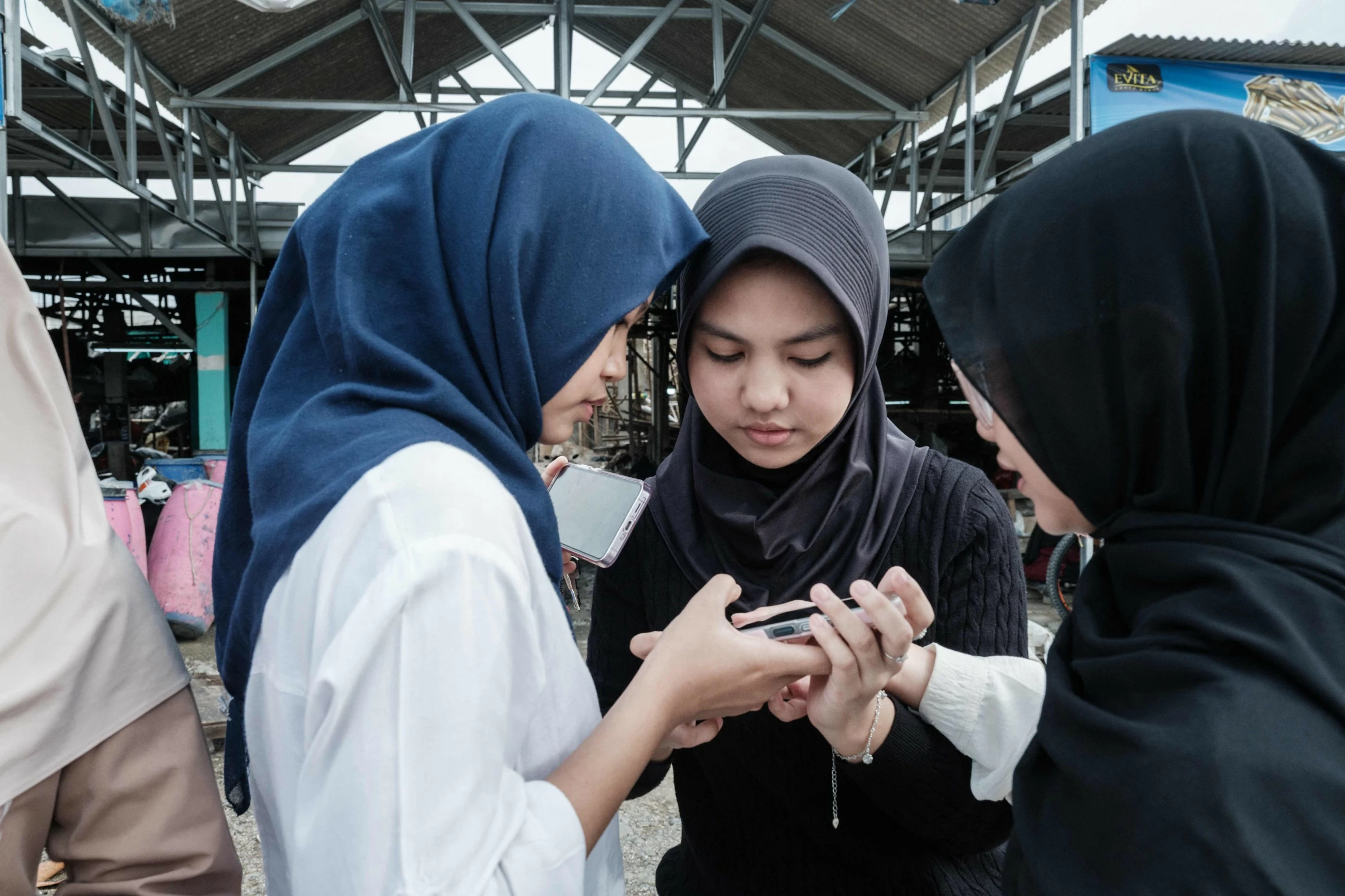
The way students communicate in their daily lives has changed, and this is a key driver in the shift in expectations. While email remains a widely used channel for university communication, it is no longer the sole reference point for how students expect to engage with institutions. Messaging platforms feel more immediate, conversational and familiar, and they increasingly shape what students consider to be a “normal” service experience.
Expectations also vary by market, with preferred communication channels differing across key sending regions such as WeChat in China, LINE in Japan and Thailand and WhatsApp with strong usage globally. Regardless of channel, continuity matters across all of them. Nearly half of students reported speaking to someone who appeared unaware of previous conversations, reinforcing how easily confidence can erode when context is lost.
Where performance falls short
In response to changing preferences, many universities have expanded their channel mix, adding messaging platforms alongside email, enquiry forms and phone. On the surface, this signals progress. In practice, it often introduces new challenges.
Channels are frequently adopted without sufficient operational readiness. Ownership is unclear, response coverage is uneven, and conversations are spread across systems that do not share context. The result is a fragmented experience where students are asked to repeat information, receive conflicting answers, or experience long delays between touchpoints. What should feel like guidance instead becomes transactional.
Over time, these transactional interactions erode confidence and weaken trust at precisely the moments when students are deciding whether to proceed. Behind these symptoms sit deeper structural issues: disconnected systems, limited visibility across the enquiry journey, and teams managing rising enquiry volumes with finite resources.
Closing the gap
These challenges cannot be solved by adding more channels or improving templates in isolation. What is required is a connected approach that treats engagement as continuous throughout the entire student journey rather than a series of disconnected interactions. Put simply, an omnichannel approach to student marketing, recruitment and conversion.
An omnichannel strategy is not simply about being present on multiple platforms. It is about integrating those platforms throughout every stage of the student journey so conversations carry context, ownership is clear, and students experience timely responses and continuity regardless of how, when or where they engage. An effective strategy ensures preferred messaging channels are clearly visible at key touchpoints and enquiries flow into a shared system that retains history and context, supported by automation and timely one-to-one interaction when decisions matter most.
As competition intensifies and expectations continue to rise, the institutions that stand out will be those that close the gap between expectation and experience, turning everyday communication into a quiet but decisive advantage.
We dive into this topic in much more detail in Sinorbis’ new guide, Omnichannel engagement – A new era of student recruitment. This report brings together insights from the Sinorbis International Students Survey and Edified’s Enquiry Experience Tracker to explore where enquiry experiences fall short and what a connected approach looks like in practice.

About the author: Professor Nicolas Chu is a global digital leader with over 25 years of experience leading technology ventures across Asia Pacific, Europe and North America.
He is a tenured professor of practice in marketing at UNSW Business School, where he also co-chairs the marketing analytics symposium, the university’s flagship industry conference, and is co-director of the UNSW marketing leadership forum. He serves on multiple boards and is deeply committed to mentoring the next generation of leaders.
He is the founder and CEO of Sinorbis, the multi award winning technology company that helps international marketing and recruitment teams manage the entire digital student acquisition journey from one place, anywhere in the world.
Previously, he held senior executive roles at Expedia as managing director, HotelClub as president, and Orbitz Worldwide as senior vice president, leading large scale international operations across more than 30 markets.
Professor Chu specialises in go to market strategy, with wide ranging interests that include measuring the sales effects and lifetime value of the marketing mix, particularly digital, as well as strategies to build brands and long-term brand equity.
He holds an MBA from AGSM, UNSW, a Master’s in Computer Science applied to Business Management from Denis Diderot University, a Master’s in Social Science in History from Sorbonne University, and is a graduate of the President Program at Harvard Business School.
The post Omnichannel engagement: the new standard for international student recruitment appeared first on The PIE News.
What's Your Reaction?