





























Europe expands quantum ambition with Euro Q Exa
Europe has strengthened its push for technological sovereignty with the launch of the Euro Q Exa quantum computing system in Munich, marking a significant addition to the continent’s developing high-performance computing network. Unveiled on 12 February at the Leibniz Supercomputing Centre, part of the Bavarian Academy of Sciences and Humanities, Euro Q Exa is designed to integrate quantum processors into Europe’s broader supercomputing ecosystem. The system forms […] The article Europe expands quantum ambition with Euro Q Exa appeared first on Arabian Post.
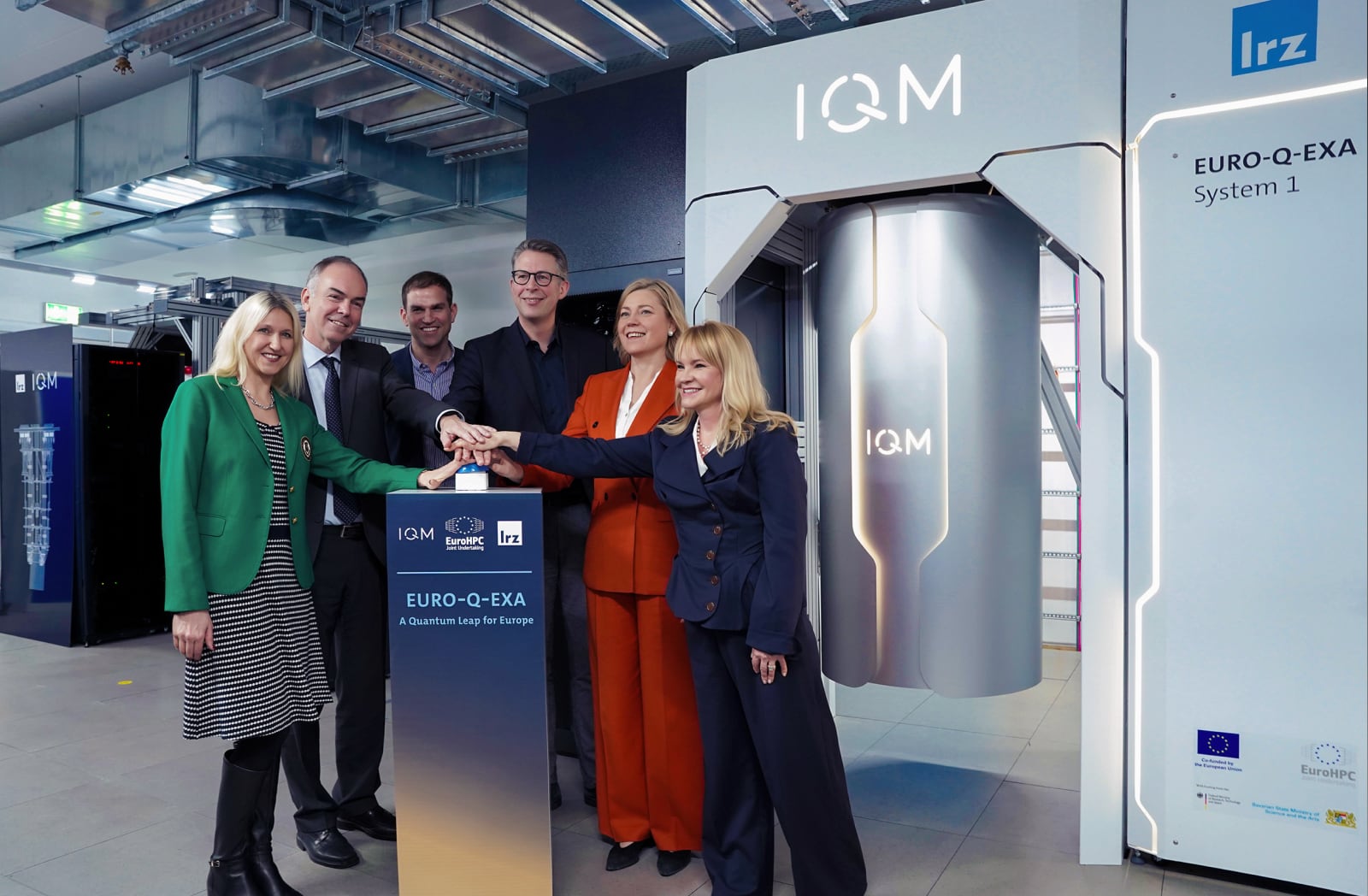
Europe has strengthened its push for technological sovereignty with the launch of the Euro Q Exa quantum computing system in Munich, marking a significant addition to the continent’s developing high-performance computing network.
Unveiled on 12 February at the Leibniz Supercomputing Centre, part of the Bavarian Academy of Sciences and Humanities, Euro Q Exa is designed to integrate quantum processors into Europe’s broader supercomputing ecosystem. The system forms part of the EuroHPC Joint Undertaking’s strategy to establish a pan-European infrastructure capable of supporting advanced research, industrial innovation and security-sensitive applications.
The Munich installation reflects a coordinated effort between national governments, the European Commission and research institutions to ensure that Europe remains competitive in a field currently dominated by the United States and China. Quantum computing is widely regarded as a transformative technology with the potential to solve complex optimisation, materials science and cryptography challenges beyond the reach of classical machines.
Euro Q Exa operates as a hybrid system, linking quantum processing units with classical high-performance computers already in service at the Leibniz Supercomputing Centre. By coupling quantum accelerators with established supercomputing clusters, researchers can experiment with algorithms that distribute workloads between traditional and quantum architectures. This approach is seen as a practical pathway while fully fault-tolerant quantum machines remain under development.
Officials at the launch emphasised that the system is not intended to replace classical supercomputers but to complement them. Europe’s strategy prioritises incremental integration, allowing scientists to test quantum algorithms in real-world research scenarios. The model aligns with the broader objectives of the EuroHPC programme, which has overseen the deployment of several petascale and pre-exascale systems across member states.
Munich’s selection as host city underscores Germany’s growing role in European quantum research. The Leibniz Supercomputing Centre already manages some of the continent’s most powerful classical computing resources. By incorporating quantum hardware into its infrastructure, the centre aims to support collaborative projects spanning chemistry, energy systems modelling and artificial intelligence.
The Euro Q Exa project is part of a wider network of quantum computers being installed across Europe under the EuroHPC framework. Systems have been announced or deployed in countries including Czechia, France, Italy and Spain. Each installation is expected to serve as a national access point while contributing to a shared European research platform.
Industry participation is central to the initiative. European quantum hardware developers and software companies have been engaged to provide components and expertise. The goal is to foster a domestic supply chain that reduces reliance on non-European technology providers. Policymakers have framed the effort as essential to digital sovereignty, particularly as quantum breakthroughs could reshape cybersecurity standards.
Quantum computing’s strategic implications extend beyond research laboratories. Current encryption protocols rely on mathematical problems that classical computers struggle to solve within practical timeframes. Quantum machines, if scaled successfully, could challenge these assumptions. European authorities have therefore paired quantum investment with parallel efforts in post-quantum cryptography to safeguard digital communications.
Funding for Euro Q Exa and related systems comes from a combination of European Union programmes and national contributions. The EuroHPC Joint Undertaking, established in 2018 and expanded in scope in 2021, coordinates these investments. Its mandate includes building exascale supercomputers and integrating emerging technologies such as quantum processors.
Technical details released at the inauguration indicate that Euro Q Exa incorporates cutting-edge quantum hardware capable of executing experimental algorithms with improved coherence times compared with earlier prototypes. While the machine does not yet approach the scale required for large-scale commercial deployment, researchers say it represents a meaningful step in practical quantum experimentation.
Experts caution that the path to fully operational quantum advantage remains complex. Error correction, qubit stability and scalability continue to present formidable engineering challenges. However, European research institutions argue that access to hybrid systems like Euro Q Exa accelerates algorithm development and workforce training, laying the groundwork for future breakthroughs.
The inauguration also reflects intensifying global competition. Major technology firms in the United States, including IBM and Google, have announced advances in quantum hardware and roadmaps toward larger qubit counts. China has similarly invested heavily in quantum communication networks and experimental processors. Europe’s response has centred on coordinated public funding and cross-border collaboration.
Beyond geopolitics, proponents highlight economic potential. Quantum computing could enhance drug discovery by modelling molecular interactions with greater precision. Energy companies are exploring optimisation algorithms to improve grid efficiency. Financial institutions are examining portfolio modelling techniques that may benefit from quantum-enhanced computation. By situating Euro Q Exa within an established supercomputing environment, policymakers aim to accelerate industry engagement.
Educational impact is another consideration. European universities are expanding quantum engineering and information science programmes to address skills shortages. Access to operational systems allows students and early-career researchers to gain practical experience rather than relying solely on simulations.
The article Europe expands quantum ambition with Euro Q Exa appeared first on Arabian Post.
What's Your Reaction?