






















Davos 2026: AI Overtakes Geopolitics as Global Leaders Navigate a Fracturing World Order
Record attendance signals new priority for the world – i.e., controlling AI infrastructure matters more than traditional alliances By Anthon Garcia and Abdul Basit The 56th World Economic Forum Annual Meeting concluded last week in Davos-Klosters with a stark message: the world’s economic future will be shaped less by traditional geopolitical maneuvering and more by […] The post Davos 2026: AI Overtakes Geopolitics as Global Leaders Navigate a Fracturing World Order appeared first on The UAE News.

Record attendance signals new priority for the world – i.e., controlling AI infrastructure matters more than traditional alliances
By Anthon Garcia and Abdul Basit
The 56th World Economic Forum Annual Meeting concluded last week in Davos-Klosters with a stark message: the world’s economic future will be shaped less by traditional geopolitical maneuvering and more by who controls artificial intelligence infrastructure. Against the most complex geopolitical backdrop in decades, nearly 3,000 leaders from 130 countries gathered under the theme ‘A Spirit of Dialogue’ – a notably aspirational choice given the rising tensions that dominated conversations.
This year’s meeting marked the highest level of government participation in the forum’s history, with 400 top political leaders including nearly 65 heads of state and government, alongside nearly 850 of the world’s top CEOs. What emerged was a clear shift: AI is no longer a technology theme running alongside business but is becoming the operating system of competitive advantage.
The AI Infrastructure Race
While geopolitical tensions grabbed headlines, particularly US President Donald Trump’s threats over Greenland and escalating trade disputes, technical sessions revealed a different priority. Leaders moved decisively from speculative debates about artificial general intelligence to practical questions about deployment, governance, and economic value capture.
Jensen Huang, President and CEO of NVIDIA, articulated the transformation ahead during his session with BlackRock CEO Larry Fink. He emphasized that AI infrastructure requires massive investment in energy, land, and skilled tradespeople, areas where Europe has natural advantages. Contrary to fears about job displacement, Huang painted an optimistic picture: “It’s wonderful that the jobs are related to trade craft… all of these jobs, we’re seeing quite a significant boom and salaries have gone up. Nearly double. Everybody should be able to make a great living; you don’t need a PhD in computer science for this.”
According to WEF research, global investment in AI is expected to increase significantly, with annual investment projected to reach $1.5 trillion for AI applications and $400 billion for infrastructure by 2030. Latin America alone has the potential to generate $1.7 trillion in annual economic value from AI, though only 23% of organizations in the region currently report generating any economic value from the technology.
Climate Action Shifts to Execution
Davos 2026 marked a notable shift in climate discourse from aspirational net-zero pledges to operational execution. As Sebastian Buckup, Managing Director at the World Economic Forum, observed: “We are seeing global progress on nature and climate wherever ambition is woven into national priorities, and delivered through open, adaptive collaboration.”
The meeting designated 2026 as the “Year of Water” under the “Blue Davos” banner, reflecting recognition that water crises represent some of the most immediate climate impacts. Nearly one-third of global GDP, approximately $31 trillion, faces high water stress by 2050, while 2.1 billion people still lack access to safe drinking water.
A coalition of major manufacturers launched a pledge to harmonize sustainability data requests for small and medium-sized enterprise suppliers, enabling competitiveness through decarbonization. The message from business leaders was clear: they’re demonstrating bankable business cases rather than just making promises.
Geopolitical Tensions Test Dialogue
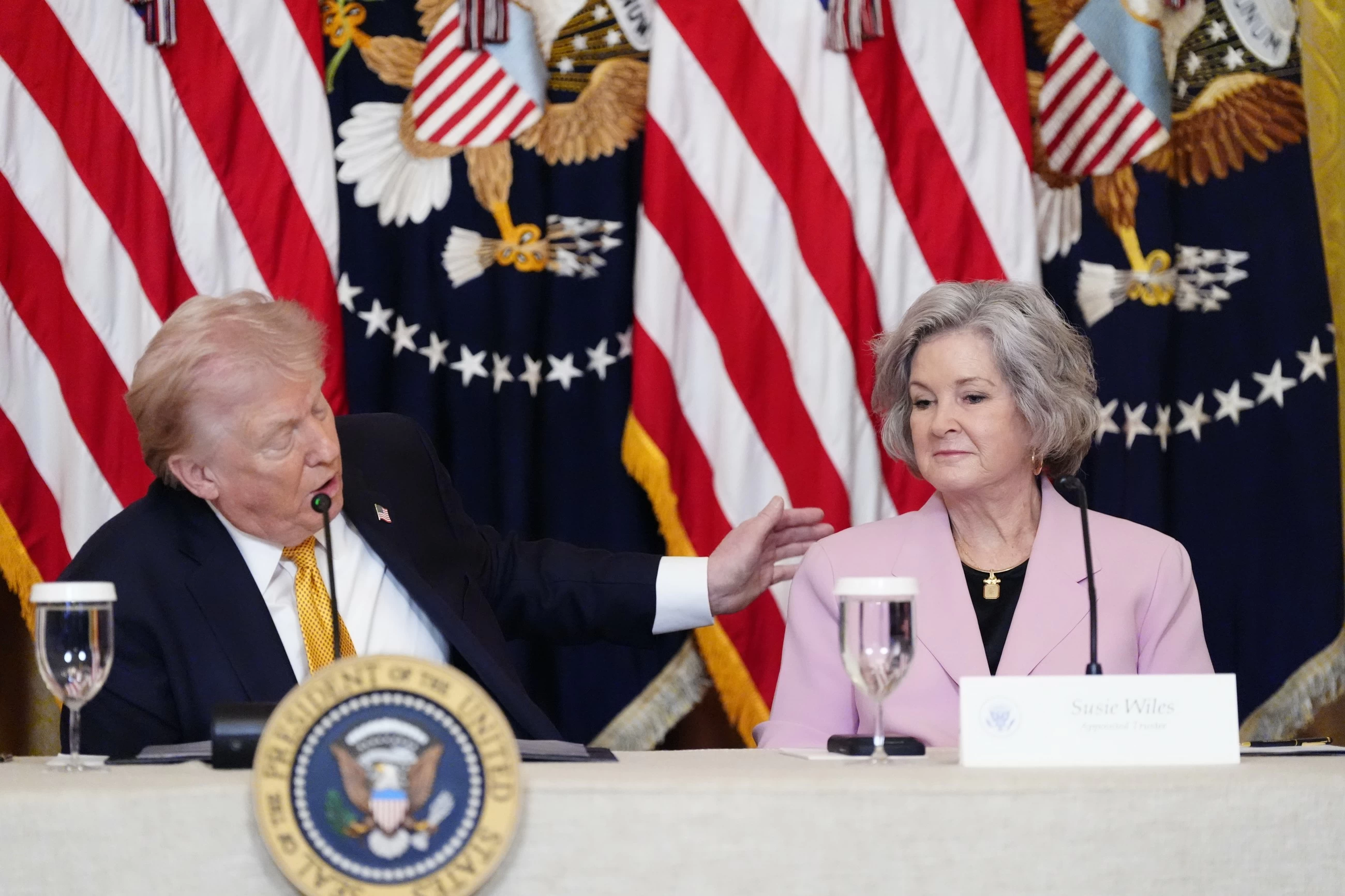
Trump’s special address touched on Greenland, trade tariffs, AI development, and nuclear power. At one point he told the packed Congress Hall: “I won’t use force” to acquire Greenland, a statement he acknowledged was “probably the biggest statement I made, because people thought I would use force.”
European Commission President Ursula von der Leyen responded with her own framework for European resilience: “Europe will always choose the world, and the world is ready to choose Europe.” She announced a €90 billion loan for Ukraine for 2026-2027, adding that Europe “needs to adjust to a new security architecture.”
Ukrainian President Volodymyr Zelenskyy delivered perhaps the most pointed critique, saying Europe “still feels more like geography, history, tradition, not a great political power” and “remains a fragmented kaleidoscope of small and middle powers.” He added: “Europe looks lost trying to convince the US president to change. But he will not change.”
French President Emmanuel Macron framed the moment in broader terms: “We are living through a profound global shift. Faced with the brutalization of the world, France and Europe must defend an effective multilateralism.”
The Imperative of Continued Engagement
Despite tensions, WEF President and CEO Børge Brende emphasized: “Dialogue is not a luxury in times of uncertainty; it is an urgent necessity.” In his closing remarks, he noted: “We are not supposed to be an echo chamber of consensus. Real dialogue requires patience, commitment and creativity.”
Swiss President Guy Parmelin urged unity: “Society, science, economics and politics must work together hand in hand, in a spirit of partnership. Otherwise problems can only be addressed in a partial and imperfect manner.”
Industrial Transformation Advances
Beyond the headlines, significant initiatives moved forward. The Forum launched Lumina, an AI-powered intelligence platform consolidating insights from over 1,000 successful industrial transformations across 32 countries and 35 industries. Agreements were reached with Ho Chi Minh City, Saudi Arabia, the United Arab Emirates, and the UN Industrial Development Organization for national deployments of the Lighthouse Operating System, a blueprint for manufacturing transformation.
Twenty-five global companies endorsed the “Commitment to Creating Economic Opportunities for All in the Intelligent Age,” aiming to impact 120 million people by 2030 through affordable AI tools, worker training, and skills-based recruitment.
Dialogue remains essential
As Canadian Prime Minister Mark Carney put it: “We actively take on the world as it is, not wait around for the world we wish to be.”
That pragmatism defined Davos 2026. The gathering showed where aspirational rhetoric gives way to operational reality, whether on climate, AI deployment, or geopolitical cooperation. The organizations and nations that move first on critical mineral cooperation, nature-positive models, water resilience, and climate-aligned finance will likely define competitive advantage for the next decade.
As Brende concluded: “We are standing at the start of a new reality, the contours of which are still to be defined.”
In an era of profound technological and geopolitical shifts, Davos 2026 proved that dialogue, however difficult, remains essential for navigating the challenges ahead. The question isn’t whether leaders will cooperate, but whether they can move fast enough to match the pace of change transforming economies, industries, and the global order.
The post Davos 2026: AI Overtakes Geopolitics as Global Leaders Navigate a Fracturing World Order appeared first on The UAE News.
What's Your Reaction?