













Tesla’s Musk pushes for home-grown TeraFab semiconductor plant
Tesla chief executive Elon Musk has put fresh emphasis on the need for the electric vehicle and technology company to build and operate its own semiconductor fabrication facility, which he calls a “TeraFab”, to sustain the firm’s ambitions in artificial intelligence, autonomous driving and robotics. Musk outlined the plan on an earnings call this week, framing it as a strategic response to looming chip supply constraints that […] The article Tesla’s Musk pushes for home-grown TeraFab semiconductor plant appeared first on Arabian Post.
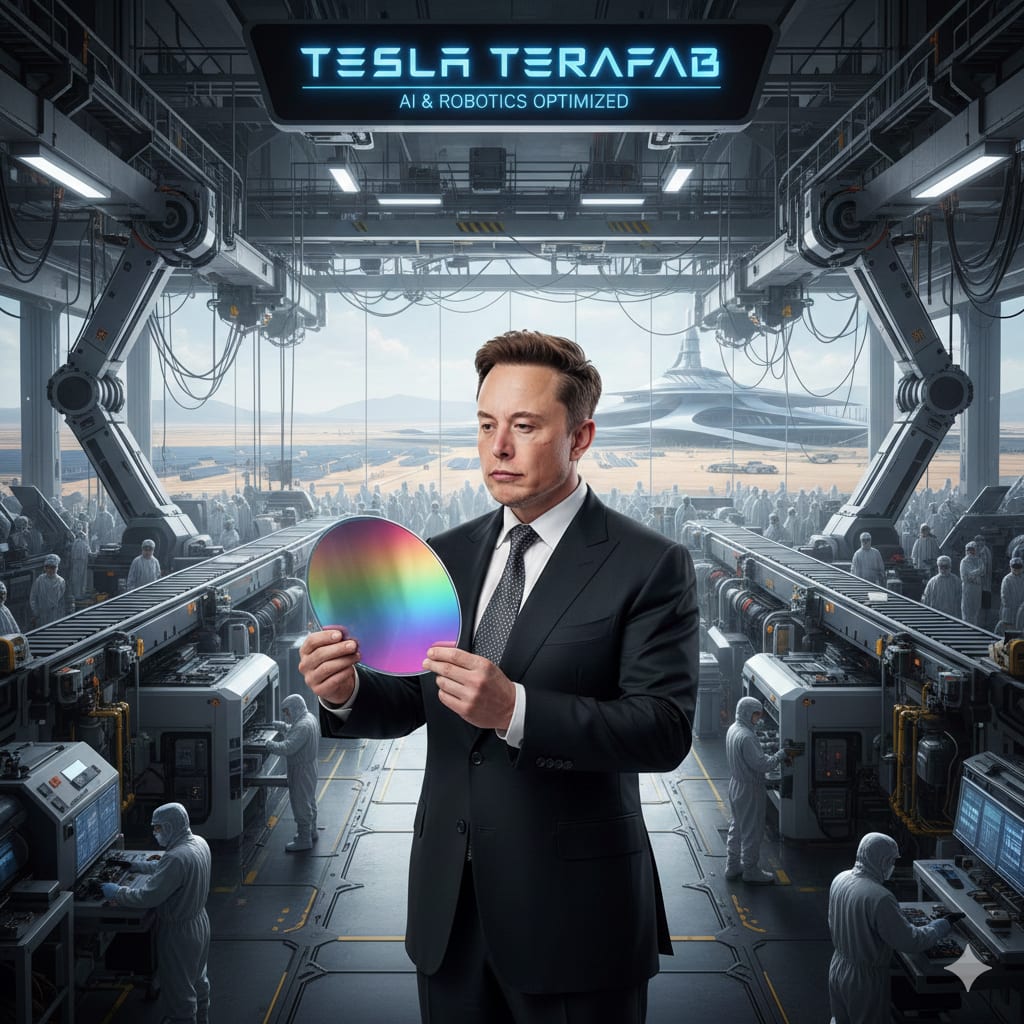
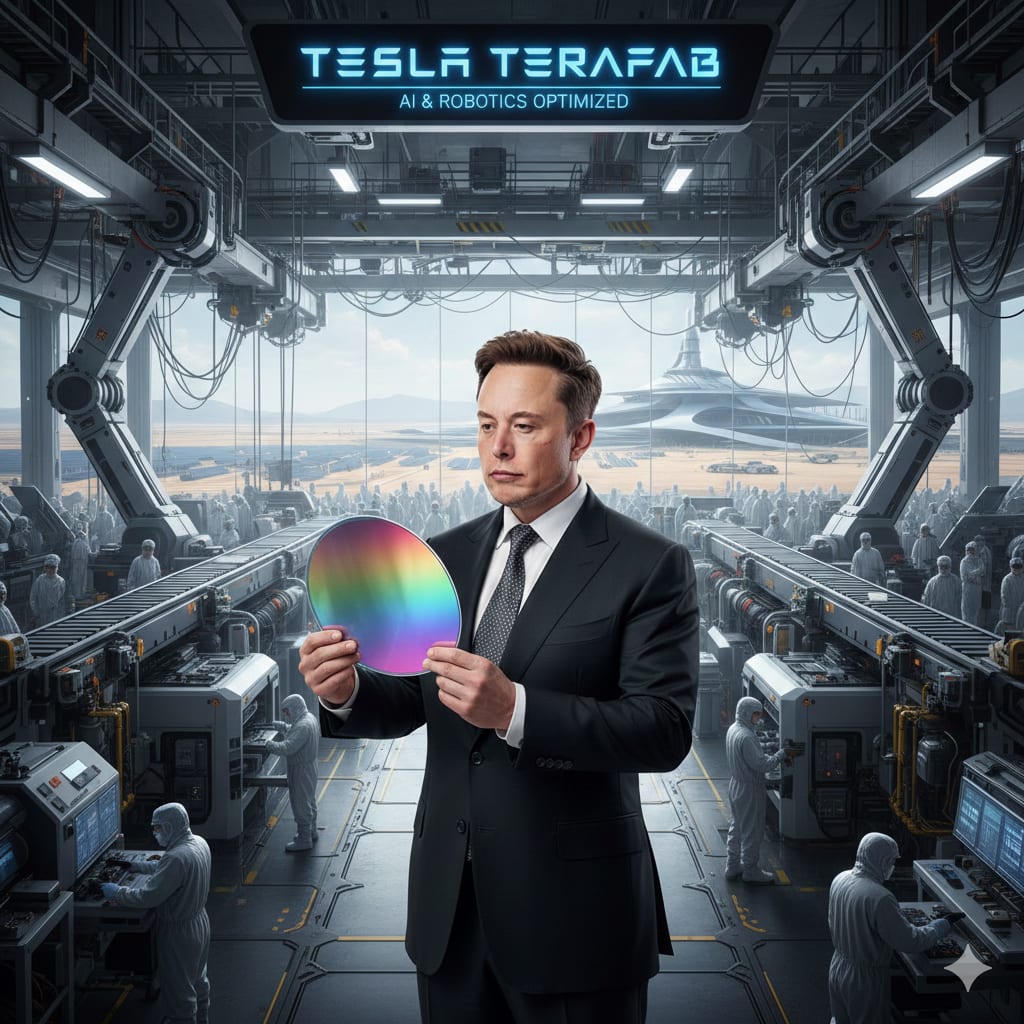
Tesla chief executive Elon Musk has put fresh emphasis on the need for the electric vehicle and technology company to build and operate its own semiconductor fabrication facility, which he calls a “TeraFab”, to sustain the firm’s ambitions in artificial intelligence, autonomous driving and robotics. Musk outlined the plan on an earnings call this week, framing it as a strategic response to looming chip supply constraints that he warned could impede Tesla’s expansion across multiple technology fronts.
Musk described the planned TeraFab as a massive, multi-billion-dollar plant encompassing logic, memory and packaging production, with operations located in the United States. It would mark a significant shift for Tesla, which currently relies on third-party foundries such as Taiwan Semiconductor Manufacturing Company, Samsung Electronics and Micron Technology for its advanced chips. Musk said existing suppliers were unlikely to meet Tesla’s projected volume needs, prompting the proposal to internalise production to “remove the probable constraint in three or four years”.
The push for self-sufficiency comes as Tesla reports a strategic pivot towards AI-driven technologies. Its latest quarterly earnings showed falling annual revenue for the first time in years, even as the company announced a $2 billion investment into Musk’s AI venture xAI to support deeper integration of artificial intelligence across its product offerings, including robotaxi and humanoid robotics projects. Musk’s call for the TeraFab reflects a broader effort to secure the supply chain for chips critical to these technologies.
Tesla has already begun tailoring its hardware roadmap around in-house silicon. The AI5 chip is slated to begin sample production by late 2026 with high-volume manufacturing targeted for 2027, and efforts to restart development of the Dojo supercomputer platform underscore the company’s confidence in its custom chip designs. Tesla plans to accelerate its chip design cycles to about nine months between generations, covering AI5 through future AI7, AI8 and AI9 architectures that are expected to support advanced autonomy software and robotics.
Industry analysts say advanced semiconductor manufacturing remains highly complex, with formidable barriers including the cost of equipment, technical talent and the steep learning curve associated with cutting-edge nodes. Nvidia chief executive Jensen Huang has previously highlighted the difficulty of matching the prowess of established foundries like TSMC, describing advanced chipmaking as “extremely hard” due to the engineering and scientific demands involved. Tesla’s prospective move into this domain would place it in direct competition with firms that have decades of fabrication expertise.
Musk’s earlier comments have hinted at the scope of his ambition, including an unconventional suggestion that Tesla might re-imagining factory cleanrooms, and even a provocatively light-hearted claim that he might eat a cheeseburger and smoke a cigar inside a next-generation fab to prove a point about production environments. While such remarks have raised eyebrows, they underscore Musk’s tendency to challenge industry norms.
Tesla is also exploring potential collaboration with other semiconductor players. Musk has referenced discussions with Intel about possible partnership opportunities linked to the TeraFab project, although no formal agreements have been announced. The interest signals Tesla’s recognition of the scale and complexity involved in fabricating advanced chips at volume.
Beyond Tesla’s internal imperatives, Musk framed the TeraFab initiative within a broader narrative about US chip self-sufficiency. He warned that reliance on foreign suppliers could expose Tesla and other technology companies to geopolitical risks, saying expanded domestic production would be essential to safeguard future growth. This aligns with growing political attention in the United States to strengthen its semiconductor manufacturing base, supported by public and private investments.
Tesla’s financial strategy for the TeraFab and other capital-intensive projects remains a matter of market focus. The company’s chief financial officer noted that existing cash reserves and capital expenditure plans could support infrastructure investments, but precise timelines and financing strategies for the chip facility are still to be determined. Musk indicated that a “bigger announcement” about the TeraFab project would come at a future event.
The article Tesla’s Musk pushes for home-grown TeraFab semiconductor plant appeared first on Arabian Post.
What's Your Reaction?