















Saudi Arabia reins in flagship megaproject ambitions
Saudi Arabia has begun a broad recalibration of its most ambitious development schemes, signalling a more pragmatic approach to spending after months of official messaging about fiscal discipline. Authorities have ordered sweeping reviews across several headline projects spanning Neom, Jeddah and Riyadh, as pressure mounts to balance long-term transformation goals with near-term economic realities. The shift became visible with the decision to delay the 2029 Asian Winter […] The article Saudi Arabia reins in flagship megaproject ambitions appeared first on Arabian Post.
Saudi Arabia has begun a broad recalibration of its most ambitious development schemes, signalling a more pragmatic approach to spending after months of official messaging about fiscal discipline. Authorities have ordered sweeping reviews across several headline projects spanning Neom, Jeddah and Riyadh, as pressure mounts to balance long-term transformation goals with near-term economic realities.
The shift became visible with the decision to delay the 2029 Asian Winter Games, a centrepiece of the kingdom’s sporting and tourism push. The event, awarded to the planned mountain resort of Trojena within the Neom development, has faced mounting cost and logistical challenges linked to constructing ski slopes and supporting infrastructure in an arid environment. Officials familiar with the matter indicated that timelines are being reassessed to align investment with more achievable delivery schedules.
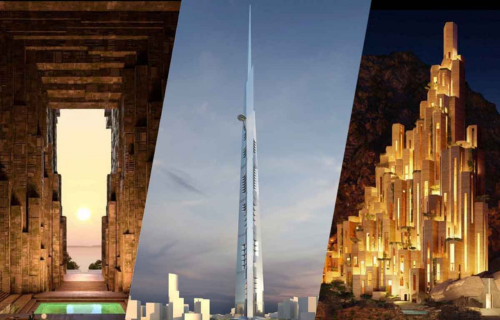
At the same time, internal reviews have been initiated at two of the most eye-catching components of Neom and Riyadh’s future skyline. These include The Line, the proposed pair of 170-kilometre-long mirrored skyscrapers designed to house millions of residents, and the Mukaab, a vast cube-shaped structure planned for the capital that is intended to anchor a new downtown district and rank among the world’s largest built structures.
Taken together, the decisions mark the clearest indication yet that authorities are prepared to slow, scale or sequence projects that have come to symbolise Vision 2030, Crown Prince Mohammed bin Salman’s blueprint to diversify the economy away from oil and reposition the kingdom as a global hub for tourism, technology and investment. While officials have repeatedly stressed that the vision itself remains intact, the latest steps suggest a sharper focus on prioritisation and capital efficiency.
Rising construction costs, tighter global financial conditions and competing domestic spending demands have all contributed to the reassessment. The government has significantly increased investment in infrastructure, housing, defence and social programmes over the past few years, while also underwriting a packed calendar of global sporting and cultural events. Analysts note that sustaining this pace simultaneously across dozens of megaprojects would strain even the largest sovereign balance sheets.
The Public Investment Fund, which sits at the centre of many of these initiatives, has been tasked with balancing ambitious development targets against the need to generate sustainable returns. Although the fund manages assets worth hundreds of billions of dollars, it has increasingly relied on debt markets and asset sales to finance expansion. A more selective approach to capital deployment is now being seen as essential to preserve financial flexibility.
The Line has long attracted both fascination and scepticism within the global architecture and urban planning community. Designed as a linear city with no cars or streets, its original concept envisioned a rapid build-out over the coming decades. People involved in the review process say planners are examining phased construction options, potential reductions in initial scale and alternative design elements that could lower costs while preserving the project’s core principles.
In Riyadh, the Mukaab has similarly raised questions about feasibility alongside its promise as a tourism and entertainment magnet. The structure, conceived as a massive cube enclosing immersive experiences, retail and hospitality, would require unprecedented engineering and capital outlay. Current deliberations are understood to be focused on construction sequencing, funding structures and potential partnerships with private investors.
Jeddah has also been drawn into the broader review, particularly around waterfront and urban regeneration schemes that are central to the city’s bid to reassert itself as a commercial and cultural gateway. While no headline cancellations have been announced, officials are said to be weighing which elements can be accelerated and which can be deferred without undermining long-term objectives.
Despite the recalibration, officials remain keen to emphasise continuity rather than retreat. Vision 2030 milestones in areas such as employment, tourism arrivals, non-oil revenue growth and women’s workforce participation have already been met or exceeded, strengthening the argument that selective restraint on megaprojects does not equate to a loss of momentum. Instead, policymakers frame the move as an evolution from headline-grabbing announcements to disciplined execution.
The article Saudi Arabia reins in flagship megaproject ambitions appeared first on Arabian Post.
What's Your Reaction?