






























Ed. Dept. Says California Violated Law by Concealing Students’ Gender Identity
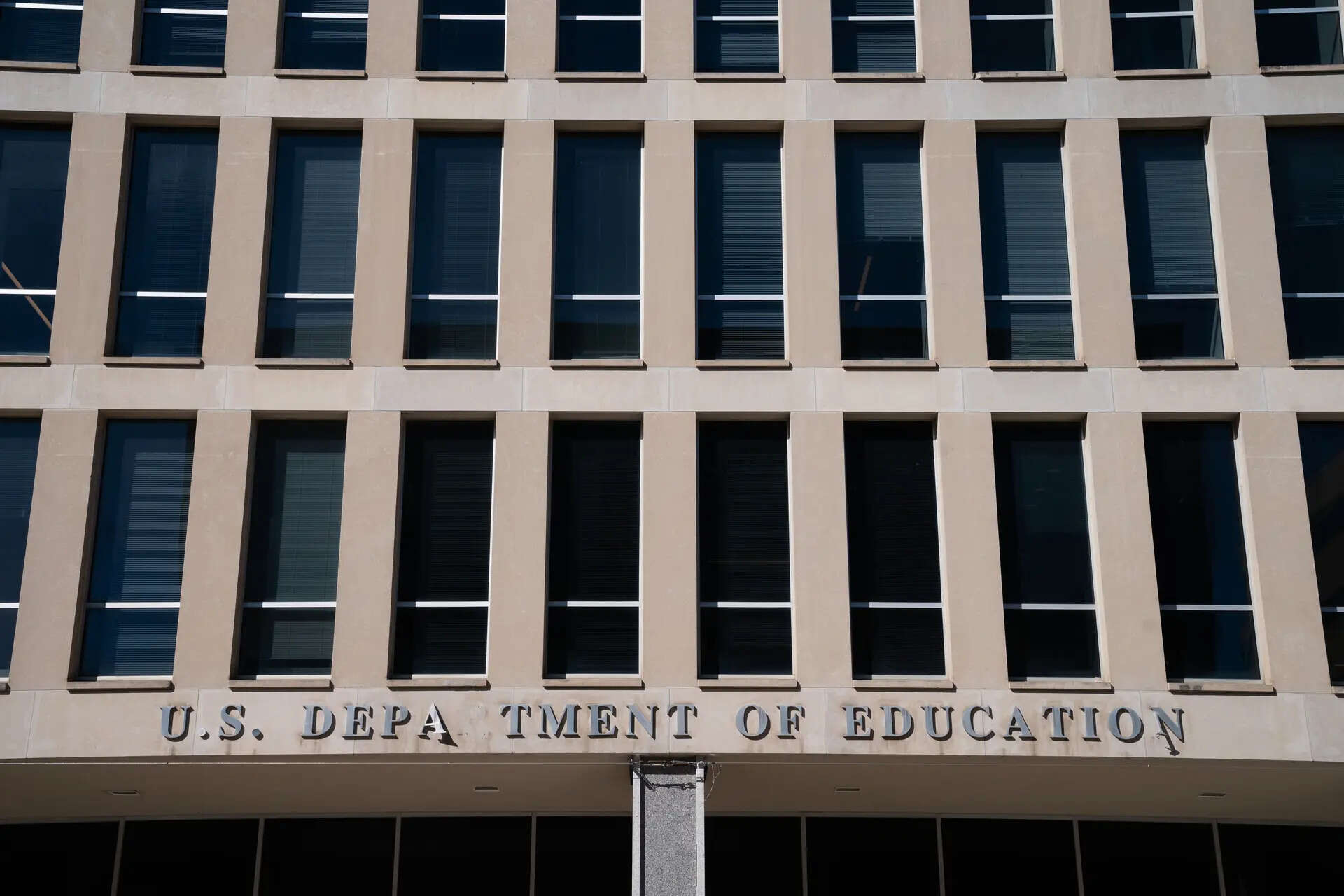
The Trump administration says California schools violated parents’ rights by pressuring schools to keep students’ gender transitions a secret. In the decision announced Wednesday, the U.S. Department of Education told state officials that they can resolve the dispute by treating any school “gender support plans” as education records available for parents’ inspection and let districts […]

The Trump administration says California schools violated parents’ rights by pressuring schools to keep students’ gender transitions a secret.
In the decision announced Wednesday, the U.S. Department of Education told state officials that they can resolve the dispute by treating any school “gender support plans” as education records available for parents’ inspection and let districts enforce “pro-parental notification approaches.”
Get stories like this delivered straight to your inbox. Sign up for The 74 Newsletter
“Under Gavin Newsom’s failed leadership, school personnel have even bragged about facilitating ‘gender transitions,’ and shared strategies to target minors and conceal information about children from their own families,” Education Secretary Linda McMahon said in a statement. The department referenced a public records request by a religious organization showing that six California districts changed the names or pronouns of 300 students in the 2023-24 school year. The announcement doesn’t spell out what penalties, if any, the state might face if it doesn’t comply.
But most student privacy experts say the department is misinterpreting the Federal Education Rights and Privacy Act. While FERPA gives parents the right to inspect their children’s education records, it doesn’t compel districts to notify a parent if their child changes their gender identity at school.
The department launched an investigation last March, based on a request from Julie Hamill, a conservative attorney who argued that state policies and guidance amounted to a “scheme” to conceal students’ gender identity from parents. Now an assistant U.S. attorney, Hamill cited a Q&A document, later rescinded, that advised schools to consult students before deciding whether to share information on their gender identity, including with their parents. Some districts, she wrote, would change students’ names and pronouns in school databases, but parents would see legal names when they logged in.
Federal officials also took aim at a California law, passed in 2025, which says districts can’t force educators to “out” students against their will. Liz Sanders, spokeswoman for the California Department of Education, said officials were reviewing the department’s findings and referred The 74 to previous statements. In October, the state said the new law, known as the SAFETY Act, doesn’t prohibit school staff “from sharing any information with parents” and doesn’t override FERPA.
The department’s determination further escalates an ongoing, emotional debate between state leaders who say students have a right to privacy and an administration that holds such decisions are the responsibility of parents. Advocates for LGBTQ students and many educators say they’re trying to protect students who might face rejection or abuse at home. But others call such actions “parental exclusion” policies that violate parents’ constitutional rights to direct the upbringing of their children.
“If a student is contemplating life-altering changes, the least a school can do is notify their parent or guardian,” McMahon posted on X.
Lydia McLaughlin, the parent whose experience Hamill cited in the letter to federal officials last January, called the news “bittersweet.” She spent two years seeking emails and schoolwork from the Hart Unified High School District, north of Los Angeles, that would demonstrate how school staff were socially transitioning her child from female to male. Administrators initially refused to meet with McLaughlin and cited a 2013 state law that protects trans students’ access to programs, sports and facilities that align with their gender identity.
McLaughlin never filed a formal FERPA complaint with the Education Department’s Student Privacy Policy Office because she ultimately got the records she was seeking after threatening to sue the district. She told The 74 last year that she believed a lot of the communication between staff members using the student’s preferred male name wasn’t in writing.
Now in college, her child identifies as a girl, “loves feminine clothes again” and has returned to ballet dancing after a five-year break.

“It’s been a long road to this moment,” McLaughlin said. “I only dreamed that there would be some sort of justice for what the school district did.”
FERPA experts disagree with the department’s conclusion. Elana Zeide, a law professor at the University of Nebraska-Lincoln, said officials didn’t point to a specific violation in which a parent was denied access to education records. And many districts still follow a legal precedent that doesn’t consider staff emails to be part of a student’s official record.
“You could not like these policies at all. You can be vehemently opposed to them,” Zeide said. “But that doesn’t mean you can accuse the state of a violation when there aren’t the facts to support it .”
But Lance Christensen, vice president of the conservative California Policy Center, called the department’s announcement. a “big deal.”
“We’re thrilled that the federal government is finally taking federal law seriously and is interested in protecting the natural rights of parents,” he said.
Jorge Reyes Salinas, a spokesman for Equality California, an LGBTQ advocacy group, called the decision “part of a broader, deliberate campaign to attack transgender young people and undermine their ability to learn and thrive in school.”
Cases before the Supreme Court
The department’s demands come as the U.S. Supreme Court considers whether to hear three different cases, including one from California, focused on the same issues.
In a class action case, U.S. District Judge Roger Benitez ruled in December in favor of two teachers from the Escondido Union School District, near San Diego, who said that requiring them to keep a student’s gender identity private violated their Christian faith. Parents later joined the lawsuit against the state.
Benitez’s broad ruling said that California schools must prominently display wording that says parents “have a federal constitutional right to be informed if their public school student child expresses gender incongruence” and that school staff also have a right to “accurately inform” parents.
Attorney General Rob Bonta appealed to the U.S. Court of Appeals for the Ninth Circuit, which blocked the ruling. The teachers are now asking the Supreme Court to overrule the lower court, but the justices have not yet said whether they’ll get involved. Florida, Montana and West Virginia filed a brief in support of the teachers and parents, saying the “Constitution places the burden on states to respect fundamental rights, not on citizens to claw back the right to parent their own children.”
But Bonta told the court that the consequences of compelling the disclosure of gender identity would be “irreversible” for many students. Benitez’s ruling, he said, would leave teachers and other school staff confused about what they can and can’t do.
The high court is also debating whether to hear two other cases in which parents allege that educators supported students’ gender identity changes at school without their knowledge. It takes only four justices to decide whether to hear a case.
Jeff and January Littlejohn of Florida sued the Leon County district, alleging that Deeklake Middle School violated their rights by supporting their child’s gender transition from female to male behind their backs.
Officials said educators were following guidance, which discourages “outing” LGBTQ students..
A federal district court dismissed the case. The U.S. Court of Appeals for the 11th Circuit also ruled for the school system, saying that educators’ actions did not “shock the conscience,” in a legal sense.
“Defendants did not act with intent to injure,” the court said. “To the contrary, they sought to help the child.”

The First Circuit Court of Appeals issued a similar ruling in Foote v. Ludlow School Committee. In that case, parents said staff at Baird Middle School in Ludlow, Massachusetts, concealed that their 11 year-old identified as genderqueer at school and was using a new preferred name.
The three-judge panel wrote that while they sympathized with the parents’ desire for information about their children, the law doesn’t “require governments to assist parents in exercising their fundamental right to direct the upbringing of their children.”
What's Your Reaction?