






























Asia tightens airport checks after Nipah alerts
Airport health authorities across parts of Asia have stepped up screening measures following confirmed Nipah virus infections in southern India, as governments move to limit the risk of cross-border transmission of one of the world’s deadliest zoonotic diseases. Thermal scanning, health declarations and targeted advisories for travellers arriving from affected regions have been expanded at several international gateways, according to aviation and public health officials. Health officials say the steps reflect heightened vigilance rather than evidence of international spread. Nipah virus, which circulates naturally in fruit bats of the Pteropus genus, does not transmit easily between people but can cause severe respiratory illness and fatal encephalitis when outbreaks occur. The case fatality rate recorded in past outbreaks has ranged between 40 per cent and 75 per cent, making it a pathogen of particular concern for health systems with dense populations and high travel volumes. Kerala has confirmed a small cluster of infections, triggering contact tracing, isolation of close contacts and temporary restrictions in affected localities. State authorities have emphasised that the outbreak remains contained, with surveillance expanded in hospitals and laboratories instructed to prioritise testing of patients with compatible symptoms. Central health agencies have issued advisories to states to strengthen infection-control protocols, especially in intensive care units. Against this backdrop, several Asian countries have updated airport health protocols. Major hubs in Southeast Asia have reinstated temperature screening for passengers arriving from Kerala and neighbouring regions, while airlines have circulated guidance to cabin crew on recognising symptoms and handling suspected cases in flight. Travellers reporting fever, headache, cough or altered consciousness are being referred for secondary screening and medical evaluation on arrival. Public health experts note that such measures are designed to buy time rather than eliminate risk entirely. Nipah virus has an incubation period that can extend beyond a week, meaning asymptomatic travellers may not be detected at borders. However, early identification of symptomatic cases can reduce exposure in crowded terminals and allow faster clinical intervention. Regional travel checks widen amid Nipah concerns, health specialists say, reflecting lessons learned from previous outbreaks. Since Nipah was first identified in Malaysia in 1998 during an outbreak linked to pig farming, sporadic episodes have been recorded in Bangladesh and India, often associated with consumption of raw date palm sap contaminated by bats or close contact with infected patients. Bangladesh has reported more frequent outbreaks, with evidence of limited human-to-human transmission in hospital and household settings. There is currently no approved vaccine or specific antiviral treatment for Nipah virus. Clinical management focuses on supportive care, including respiratory support and treatment of complications. Experimental therapies and vaccine candidates are under development, but none has reached late-stage approval. This places a premium on early detection, isolation and rigorous infection control. Airports are a critical interface in that strategy. Aviation authorities say screening has been calibrated to avoid unnecessary disruption to travel while maintaining public confidence. Airlines operating routes to India have not reported cancellations, though some passengers have faced longer processing times at arrival halls. Economic analysts point out that even limited health alerts can affect tourism-dependent economies if risk communication is mishandled. Governments have sought to strike a careful balance, emphasising that there is no general travel ban and that routine travel remains safe. Health ministries across the region have coordinated messaging through existing disease surveillance networks to ensure consistent guidance. Within India, the outbreak has renewed scrutiny of zoonotic spillover risks linked to deforestation, urban expansion and climate variability. Ecologists note that changes in bat habitats can increase contact with human settlements, raising the likelihood of viral transmission. Public health planners argue that long-term prevention will require stronger integration of animal, human and environmental health policies under a “One Health” approach. The article Asia tightens airport checks after Nipah alerts appeared first on Arabian Post.
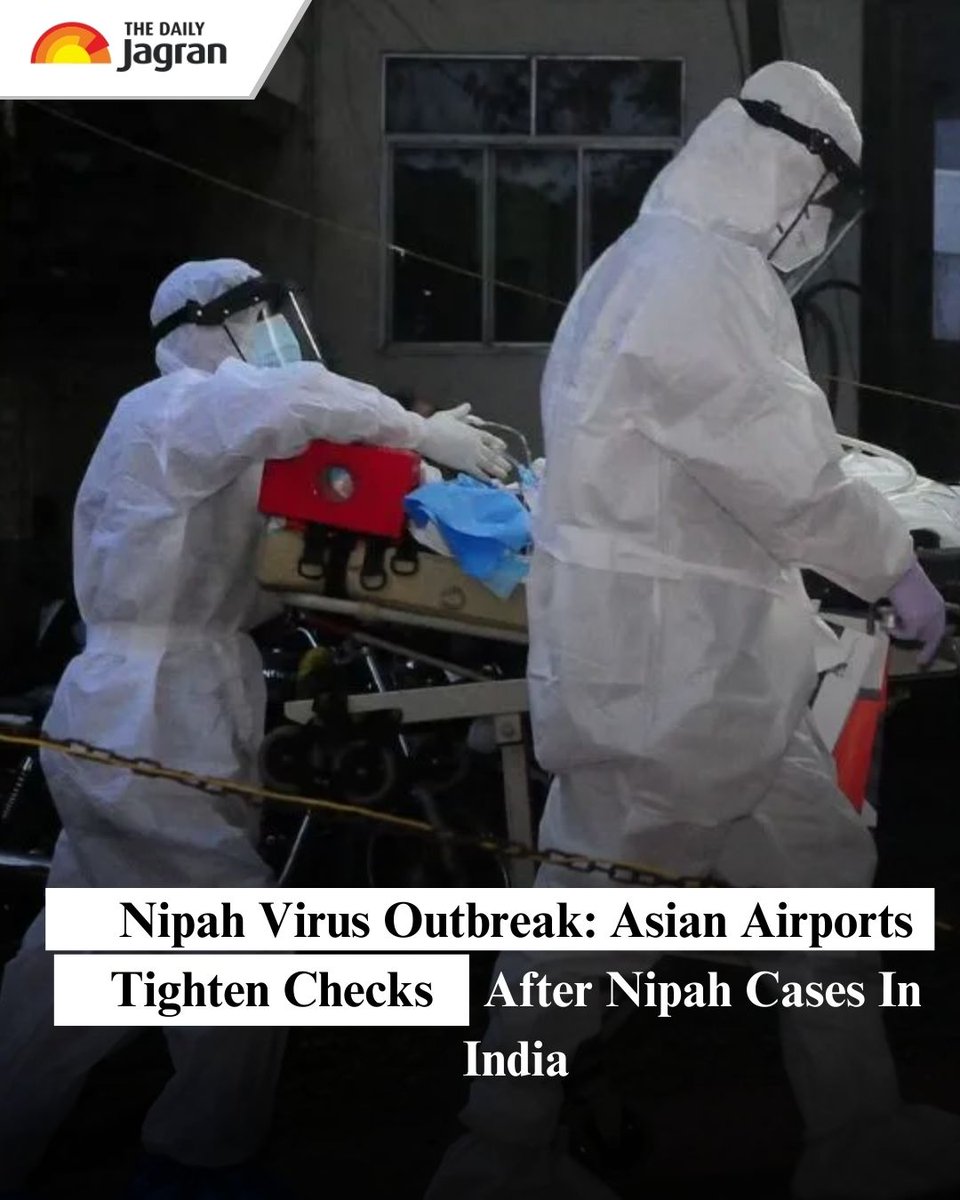
Airport health authorities across parts of Asia have stepped up screening measures following confirmed Nipah virus infections in southern India, as governments move to limit the risk of cross-border transmission of one of the world’s deadliest zoonotic diseases. Thermal scanning, health declarations and targeted advisories for travellers arriving from affected regions have been expanded at several international gateways, according to aviation and public health officials.
Health officials say the steps reflect heightened vigilance rather than evidence of international spread. Nipah virus, which circulates naturally in fruit bats of the Pteropus genus, does not transmit easily between people but can cause severe respiratory illness and fatal encephalitis when outbreaks occur. The case fatality rate recorded in past outbreaks has ranged between 40 per cent and 75 per cent, making it a pathogen of particular concern for health systems with dense populations and high travel volumes.
Kerala has confirmed a small cluster of infections, triggering contact tracing, isolation of close contacts and temporary restrictions in affected localities. State authorities have emphasised that the outbreak remains contained, with surveillance expanded in hospitals and laboratories instructed to prioritise testing of patients with compatible symptoms. Central health agencies have issued advisories to states to strengthen infection-control protocols, especially in intensive care units.
Against this backdrop, several Asian countries have updated airport health protocols. Major hubs in Southeast Asia have reinstated temperature screening for passengers arriving from Kerala and neighbouring regions, while airlines have circulated guidance to cabin crew on recognising symptoms and handling suspected cases in flight. Travellers reporting fever, headache, cough or altered consciousness are being referred for secondary screening and medical evaluation on arrival.
Public health experts note that such measures are designed to buy time rather than eliminate risk entirely. Nipah virus has an incubation period that can extend beyond a week, meaning asymptomatic travellers may not be detected at borders. However, early identification of symptomatic cases can reduce exposure in crowded terminals and allow faster clinical intervention.
Regional travel checks widen amid Nipah concerns, health specialists say, reflecting lessons learned from previous outbreaks. Since Nipah was first identified in Malaysia in 1998 during an outbreak linked to pig farming, sporadic episodes have been recorded in Bangladesh and India, often associated with consumption of raw date palm sap contaminated by bats or close contact with infected patients. Bangladesh has reported more frequent outbreaks, with evidence of limited human-to-human transmission in hospital and household settings.
There is currently no approved vaccine or specific antiviral treatment for Nipah virus. Clinical management focuses on supportive care, including respiratory support and treatment of complications. Experimental therapies and vaccine candidates are under development, but none has reached late-stage approval. This places a premium on early detection, isolation and rigorous infection control.
Airports are a critical interface in that strategy. Aviation authorities say screening has been calibrated to avoid unnecessary disruption to travel while maintaining public confidence. Airlines operating routes to India have not reported cancellations, though some passengers have faced longer processing times at arrival halls.
Economic analysts point out that even limited health alerts can affect tourism-dependent economies if risk communication is mishandled. Governments have sought to strike a careful balance, emphasising that there is no general travel ban and that routine travel remains safe. Health ministries across the region have coordinated messaging through existing disease surveillance networks to ensure consistent guidance.
Within India, the outbreak has renewed scrutiny of zoonotic spillover risks linked to deforestation, urban expansion and climate variability. Ecologists note that changes in bat habitats can increase contact with human settlements, raising the likelihood of viral transmission. Public health planners argue that long-term prevention will require stronger integration of animal, human and environmental health policies under a “One Health” approach.
The article Asia tightens airport checks after Nipah alerts appeared first on Arabian Post.
What's Your Reaction?